Time For A Porter/Hale Road Trip... North We Go March 2009
LA To Saratoga, California To Stockton, Califonria To LA
On Our Way Up North (Page One)
We decided to go up north and visit Sue's sister and family. we always find something interesting to do and this trip was no exception!
We visited the California Academy of Sciences on Saturday morning, the only place on the planet with an aquarium, a planetarium, a natural history museum, and a 4-story rainforest all under one roof.
Did You Know? - The California Academy of Sciences is a multifaceted scientific institution committed to leading-edge research, to educational outreach, and to finding new and innovative ways to engage and inspire the public.
The new Academy is a single structure but contains multiple venues, including the aquarium, the planetarium, the natural history museum and the 4-story rainforest. In addition, there's a new 3D theater, a lecture hall, a Naturalist Center, two restaurants, an adjacent garden and aviary, a roof terrace, and an Academy store. The new building also houses the Academy science labs and administrative offices, including an extensive library and scientific archive consisting of more than 20 million specimens
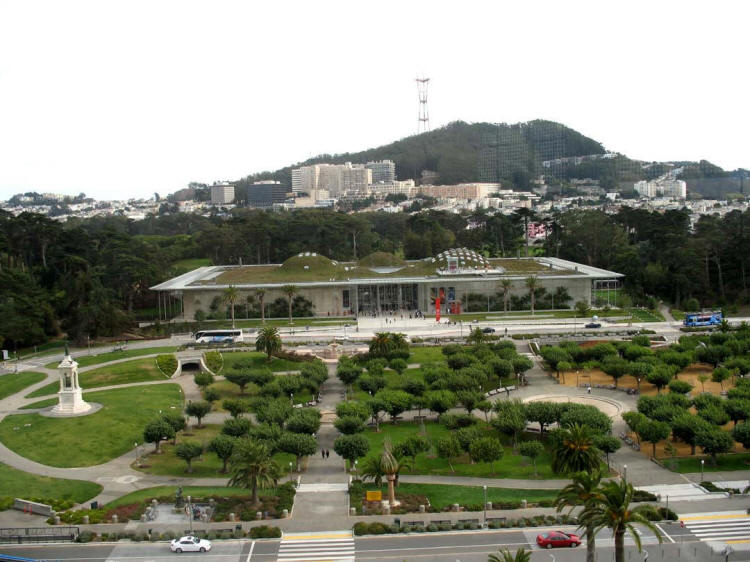
Wow! A green roof!
We got there and because Diane was a member, we got into the early line! The weather was super, about 60 degrees making the journey very nice!
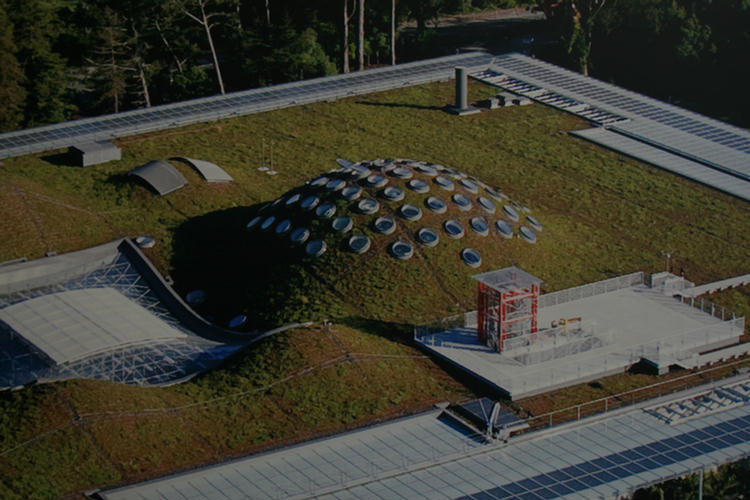
The roof was fascinating to see

The artists conception was very close to reality
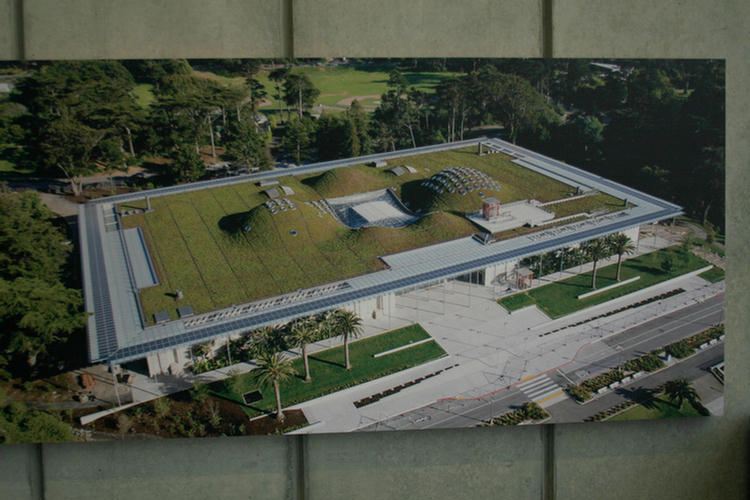
4.5 acres of roof line and solar cells around the outside
An Impressive Area
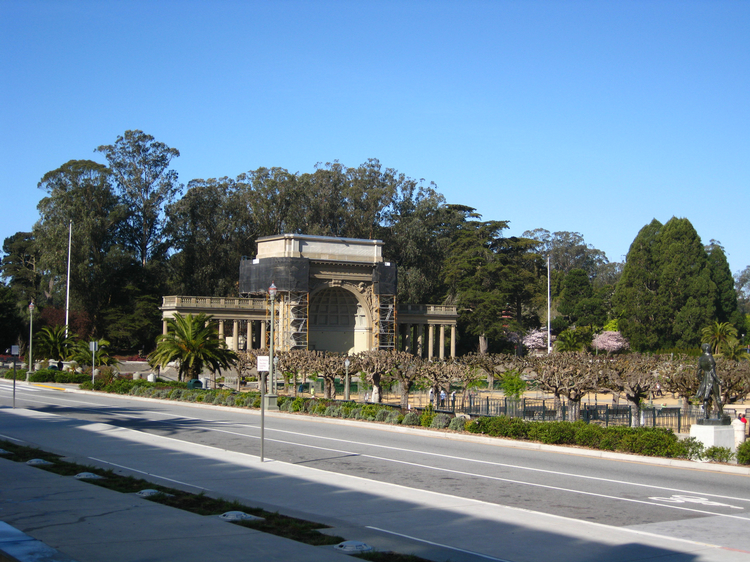
A bright crisp morning greeted us!

Diane had a membership and it saved hours of waiting. We are in the short
line to the right.
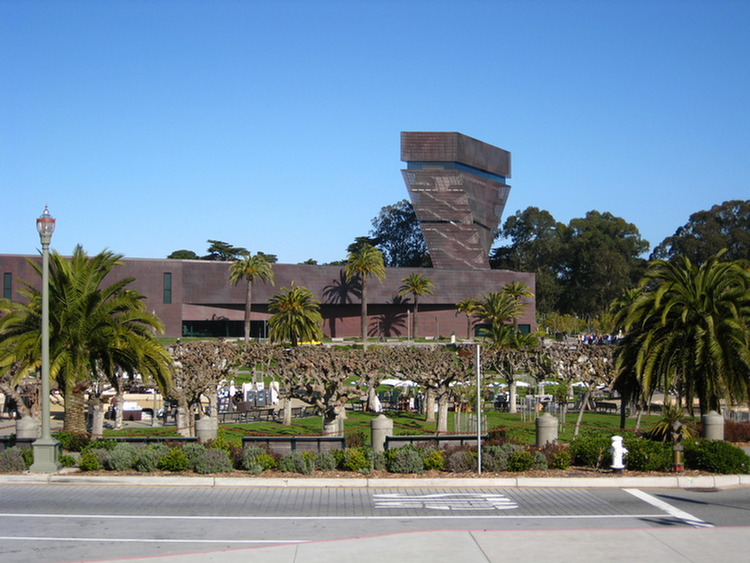
It's parking lots underneath the trees!

A lot to see
The Adventure Started As Soon As We Were Inside

Paul thought this a funny sign until he finally got it... It was about
him!
We Wandered Around For A Few Minutes Before We Developed A Plan
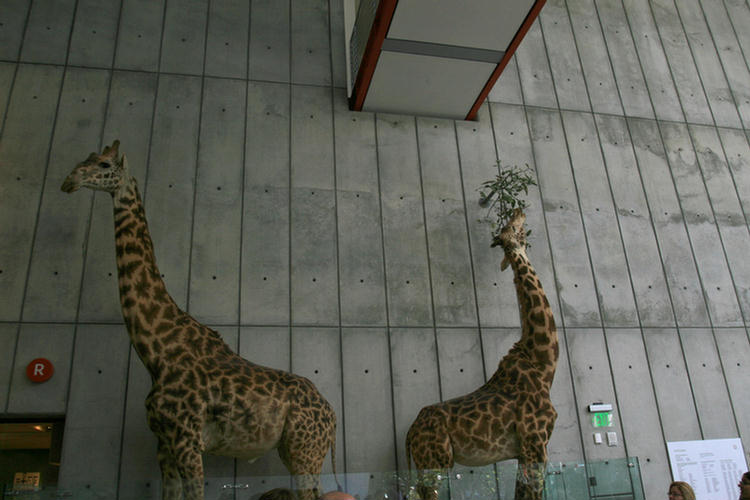
Where is mummy when you need her?
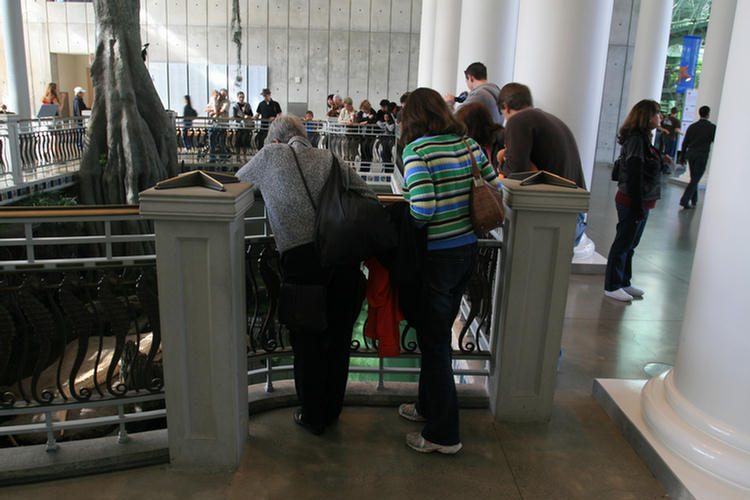
They could not resist seeing the albino alligator!
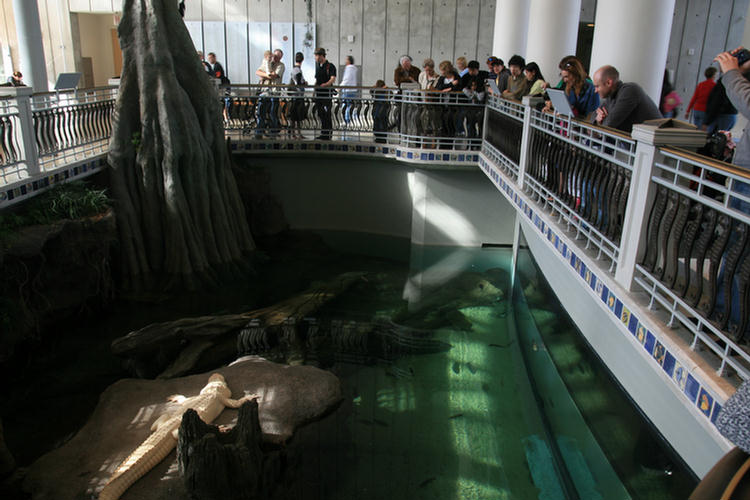
Yes, a white alligator
Did you know? - You may have heard about white tigers, but white ...
alligators!?...
Yes, they do exist and are almost impossible to be found in nature as
they would be extremely vulnerable to predators or the sun. Around US,
there are 50 albino individuals.
An albino lacks or has an inhibited gene for melanin, the brown pigment
from the skin and eye's iris, that's why the alligator's skin appears
white and her eyes pinkish (due to the blood vessels).
The visitors must enter a dark lobby to see the gator, as the sun could
burn its skin.
The animal is still for hours and occasionally, the movement of one
eyelid would reveal an inner membrane (extremely reduced in humans) that
makes the eye appear milky.
Some white alligators are leucistic and this produces small amounts of
melanin, that's why their eyes are blue.
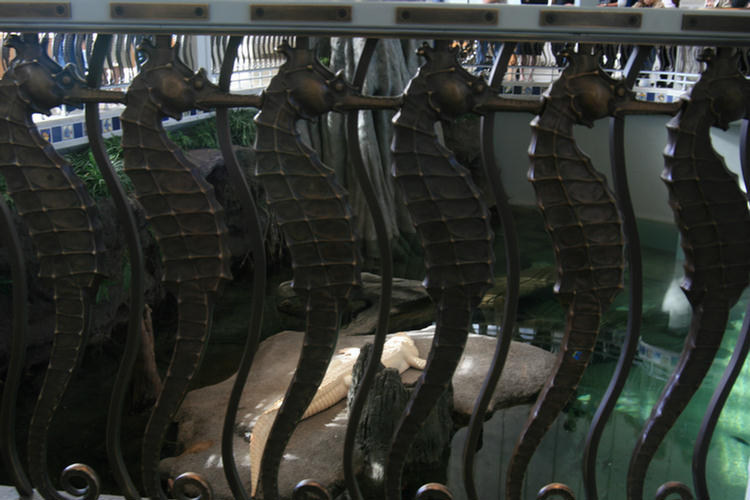
The railings were from the original museum located on the property

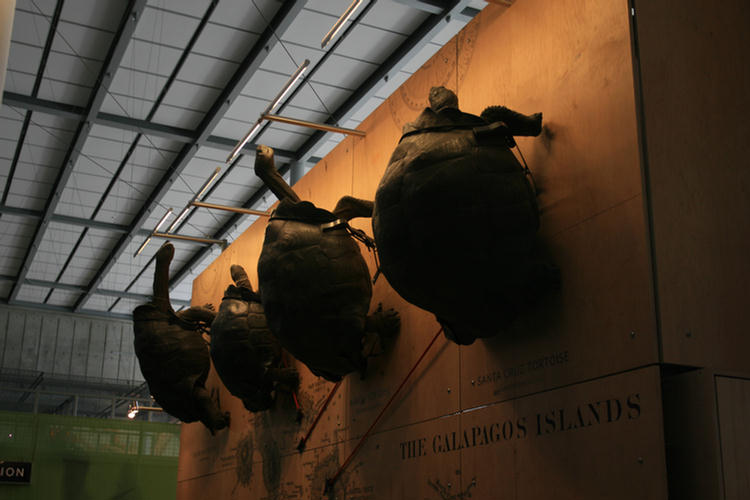
Four different tortoises from four of the Galapagos Island
Our Plan Was To Visit The Rainforest!
Did You Know? - The Rainforest was a great visit! The Academy rainforest is contained within a spectacular 90-foot diameter glass dome. It's the largest spherical rainforest exhibit in the world. Follow a spiraling path up through the exhibit, experience what it's like to actually walk in a real rainforest. Temperatures are maintained at 82-85 degrees Fahrenheit, and humidity is maintained at 75% or above using a unique misting system.
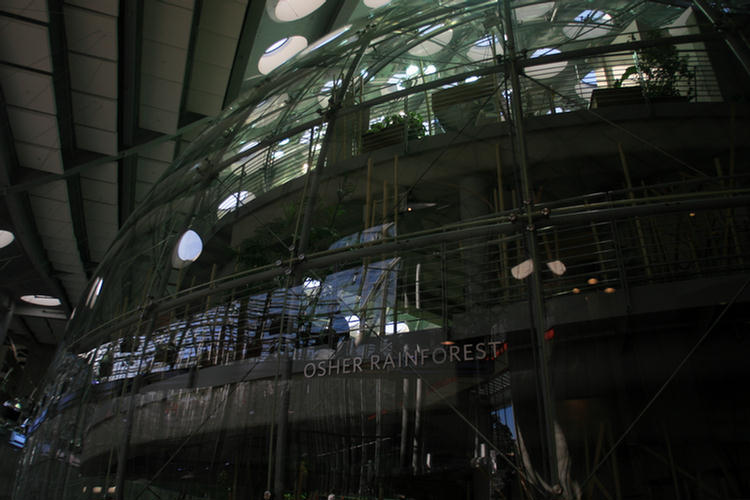
The glass was sealed tight to keep the environment self contained
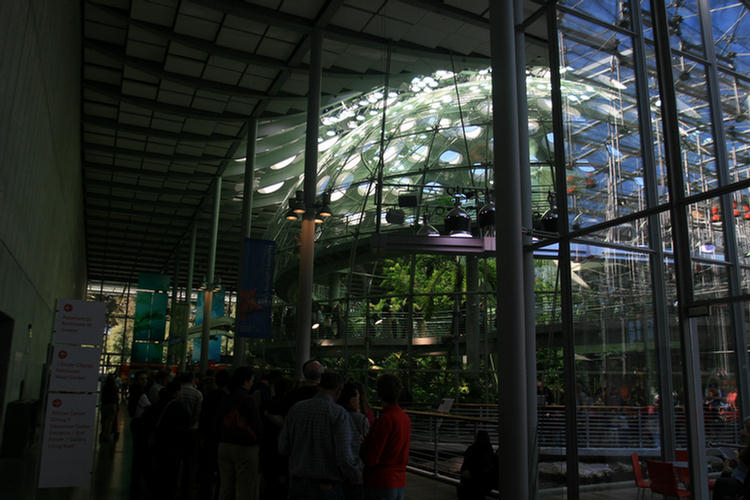
The biosphere was totally inside the building
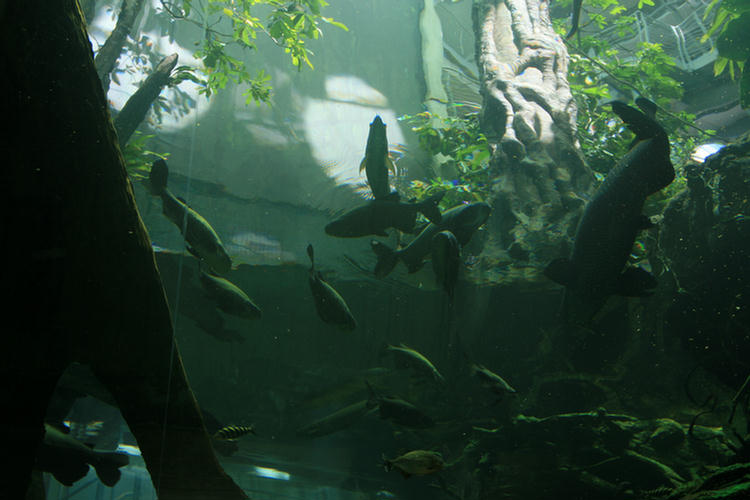
Did You Know? - The Academy Rainforest is teeming with 1,600 live animals - including 600 free-flying birds and butterflies, 100 exotic reptiles and amphibians, and a cave full of bats. There's also 100,000 gallon "Flooded Forest" tank, where hundreds of tropical freshwater fish cruise overhead.
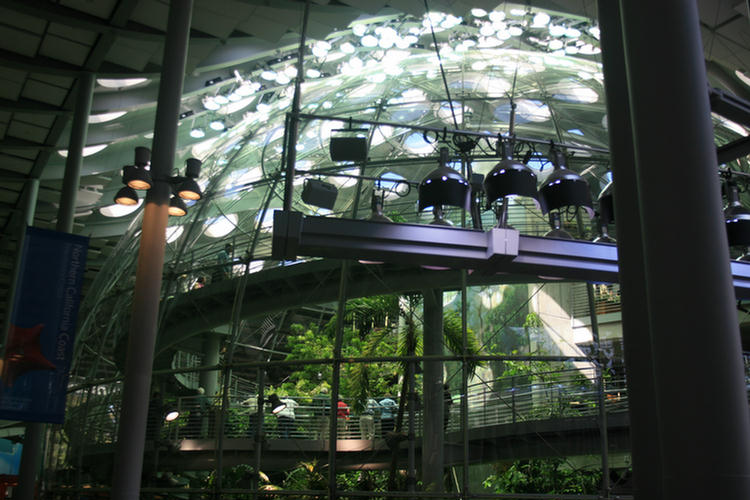
The skylights provided controlled lighting into the rainforest biosphere
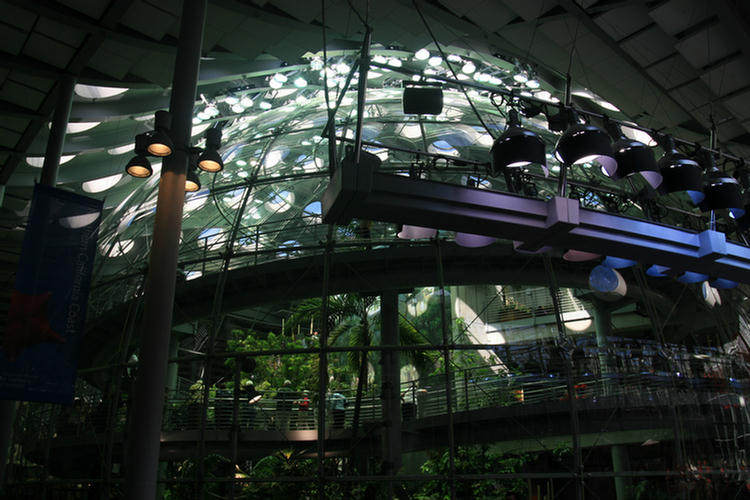
Did You Know? - Eighty skylights in the roof, supplemented with metal halide lights, enable the growth of lush, tropical plants found in various rainforests around the world.
Living plants include numerous trees - such as the Brazilian beautyleaf and West Indies mahogany, dozens of shrubs - including Theobrama cacao, the plant from which chocolate is made, and hundreds of flowering plants - from begonias and philodendrons to orchids and bromeliads.
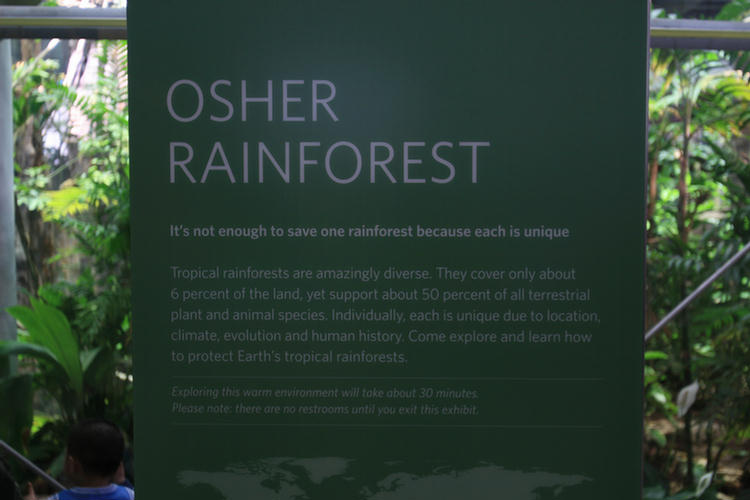
The San Francisco-based Bernard Osher Foundation made a $20 million donation to
the new Academy project in support of the living roof and the four-story living
rainforest exhibit. In honor of this generous gift, the Academy announced the
naming of The Osher Living Roof and The Osher Rainforest.
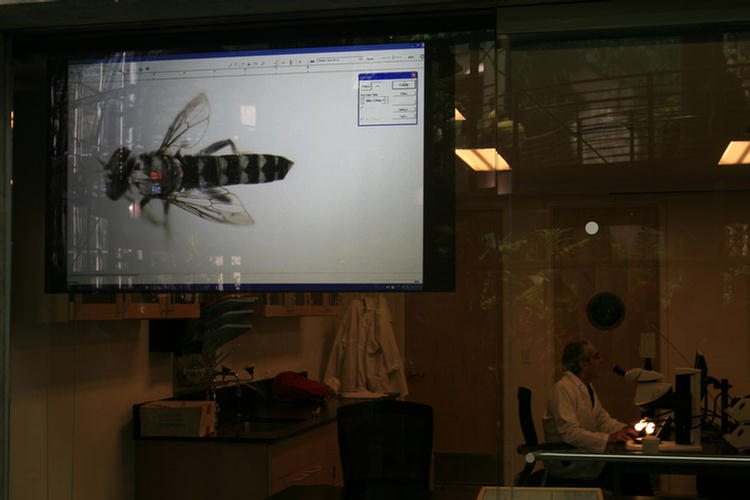
We could see scientists cataloging specimens while we waited in line.
The LCD screen showed what he was doing.
Life Was Everywhere As Soon As We Entered The Biosphere
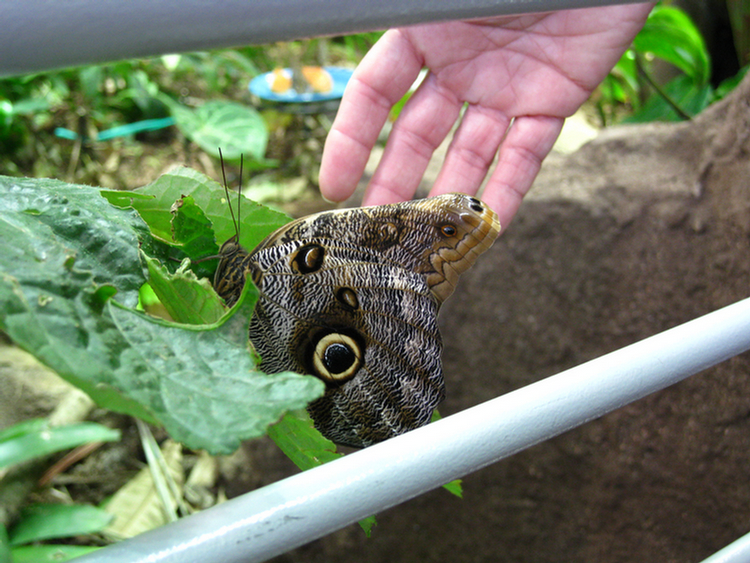
These large butterflies were all over the place

They were eating fruit from the plate

Diane and Sue

A fine specimen of ?????

At the bottom of the rainforest was the water containing many fish of the
rainforest
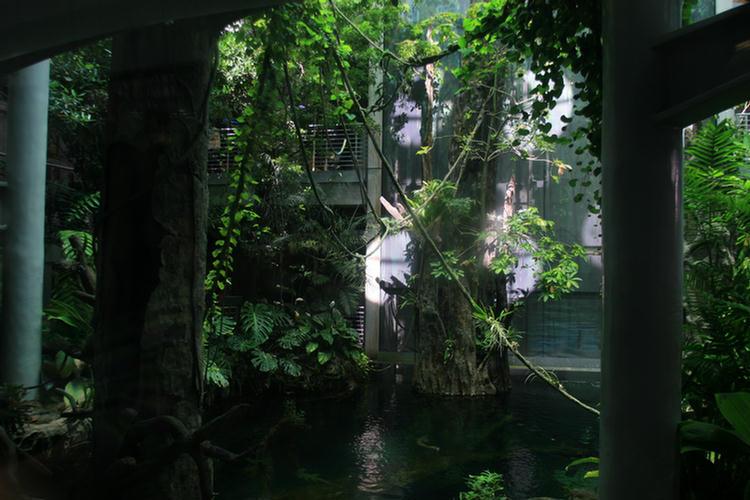
The trees grow out of the water
Did You Know? - The Academy Rainforest is teeming with 1,600 live animals - including 600 free-flying birds and butterflies, 100 exotic reptiles and amphibians, and a cave full of bats. There's also 100,000 gallon "Flooded Forest" tank, where hundreds of tropical freshwater fish cruise overhead. Each level represents a different rainforest around the world - Borneo, Madagascar, Costa Rica and the Amazon. Each level represents a distinct rainforest habitat containing its own special zoological garden.
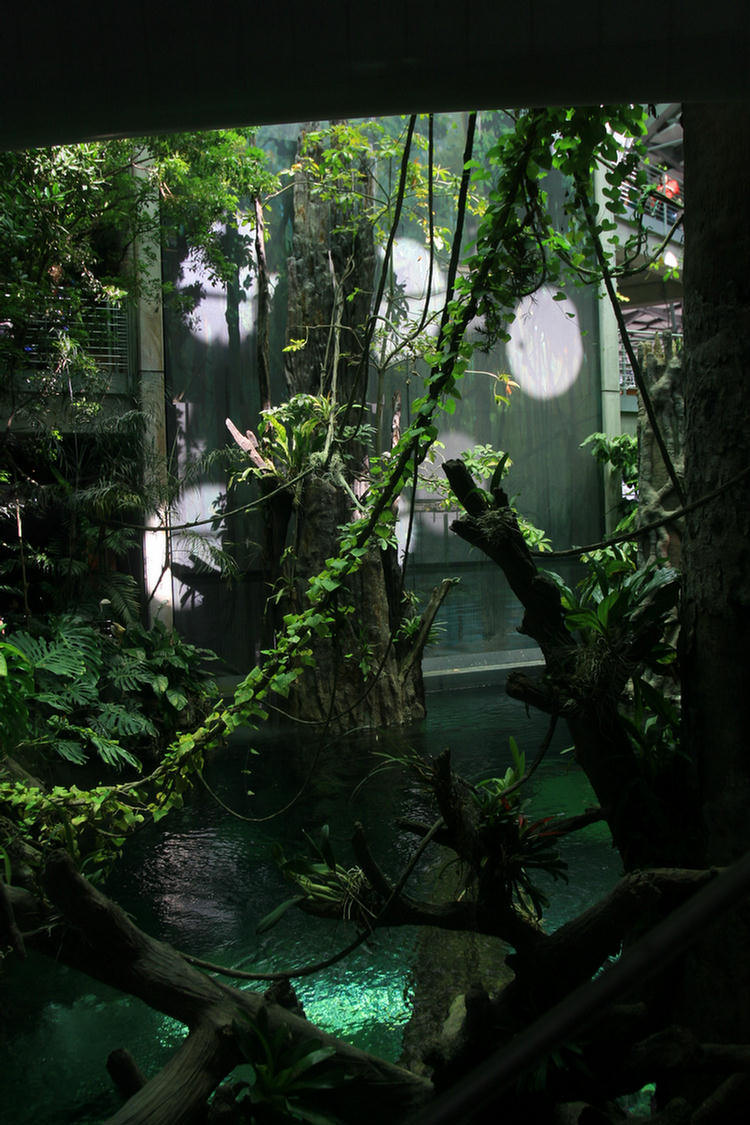
Behind the screen was the elevators
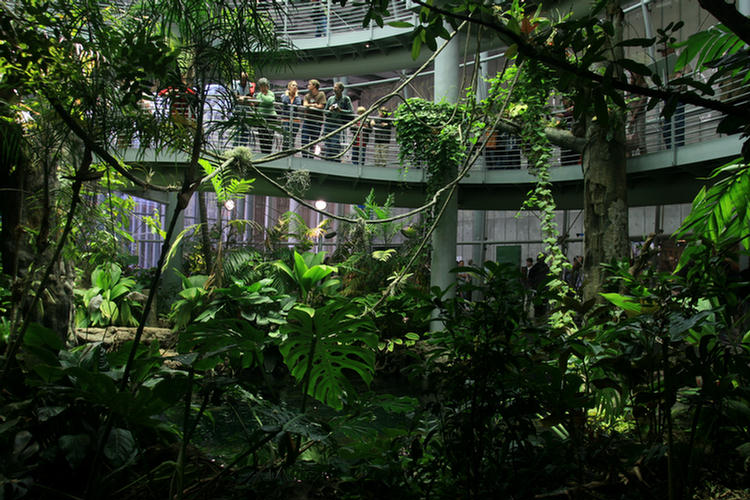
People could stand on the ramps and watch all of the activities going on

They liked the rainforest!

There were strange animals all over the place
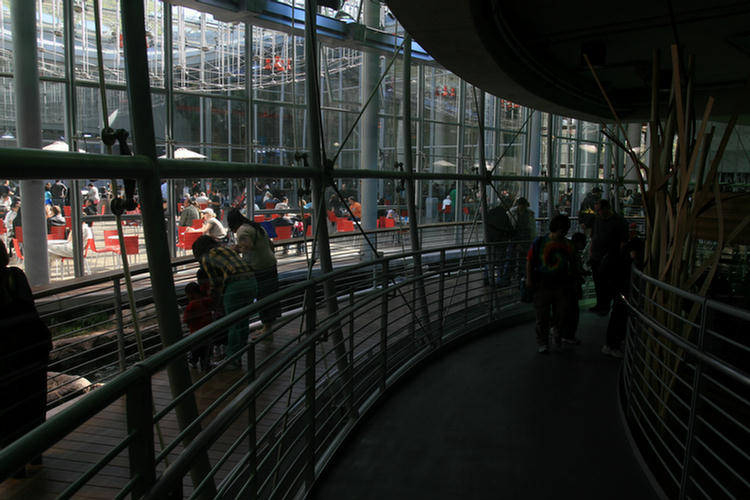
We walked up the ramp three stories
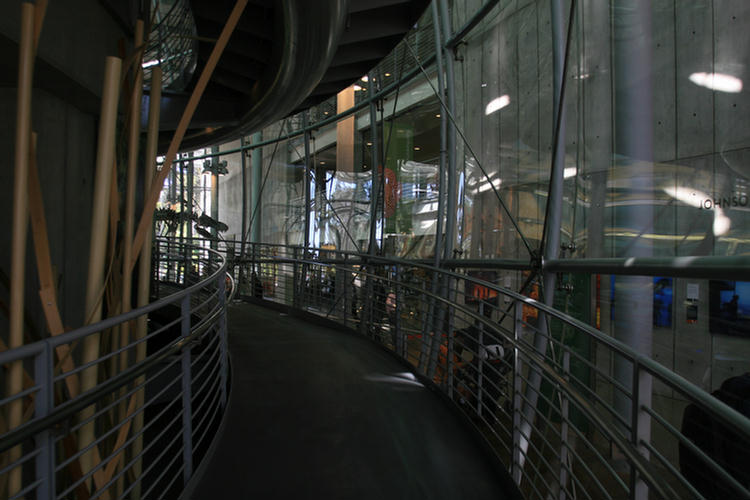
The ramp ran from the ground floor to the third floor where one caught the
elevator down
to the basement to see the fish from a underwater perspective
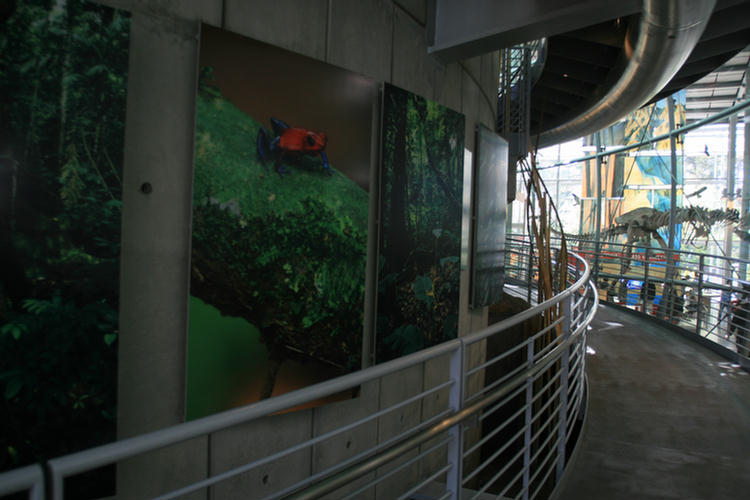
Pictures and cement everywhere
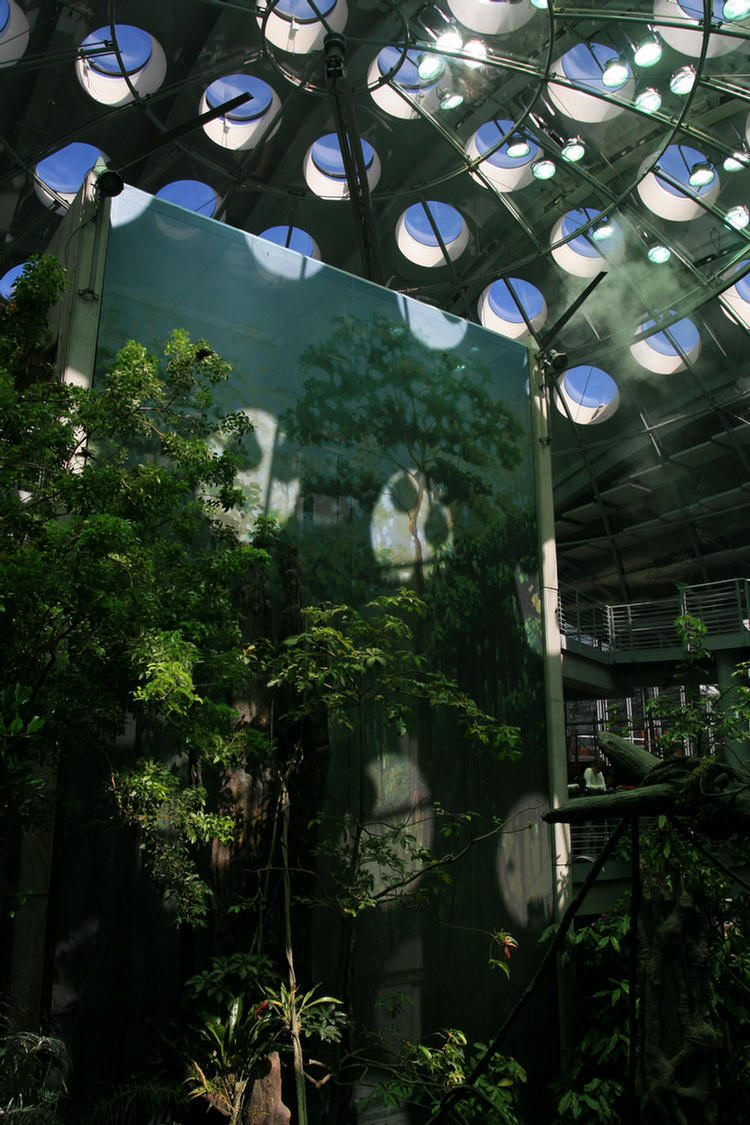
The holes in the roof provided natural light for the forest
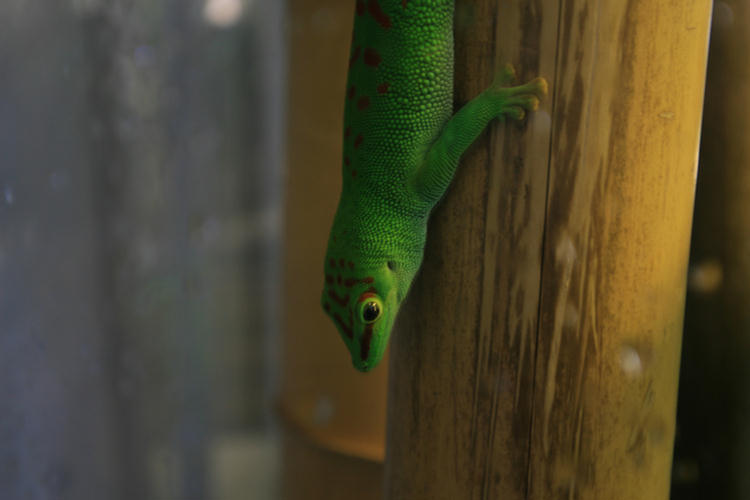
We were up close and personal with many of the inhabitants
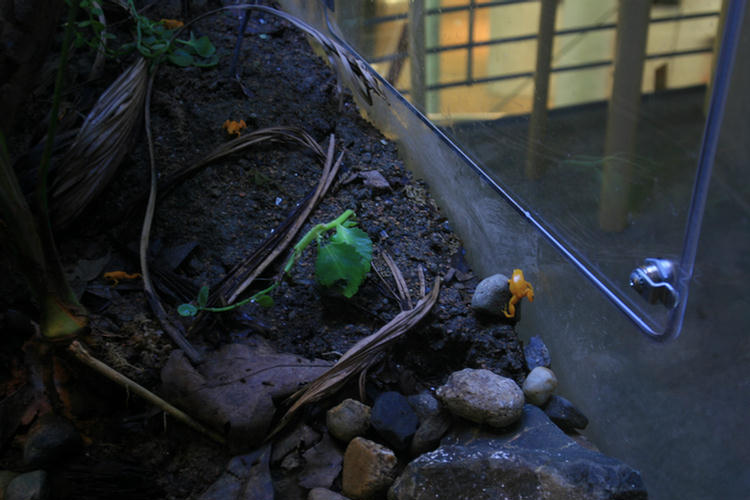
Little orange frogs were poisonous
NOTE: Many places there were signs saying no photography so we followed the rules... You must see it in person!
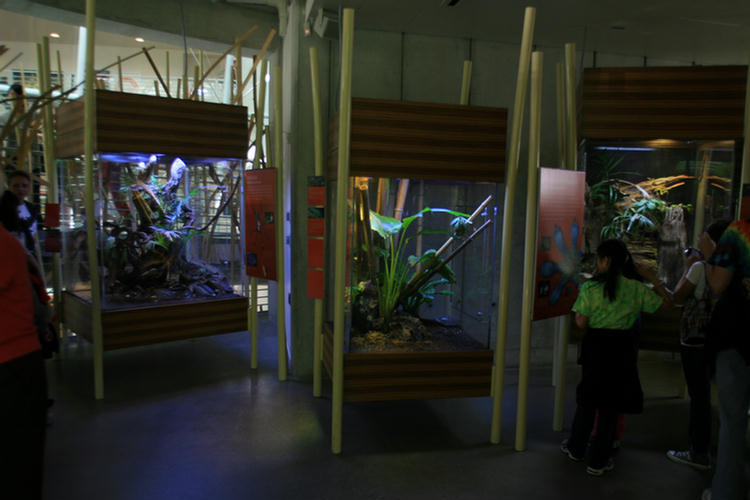
Many displays at each level f the rainforest
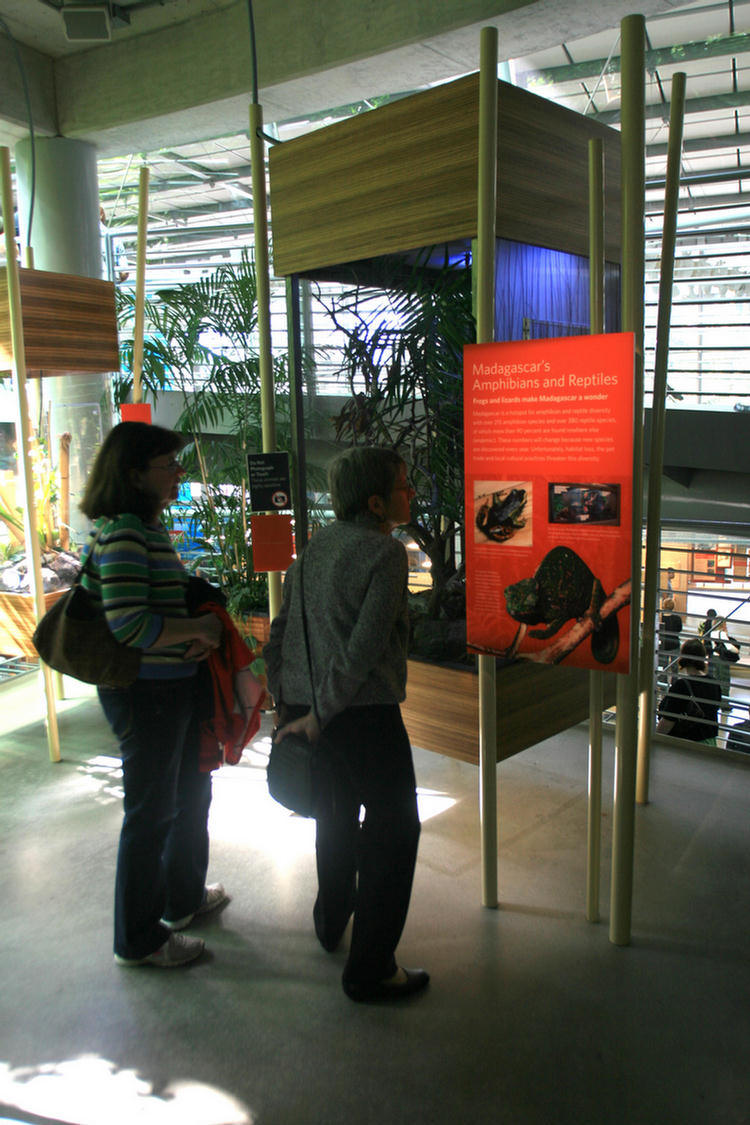
Reptiles, E-u-u-u-u

This is an active nest hanging in the tree
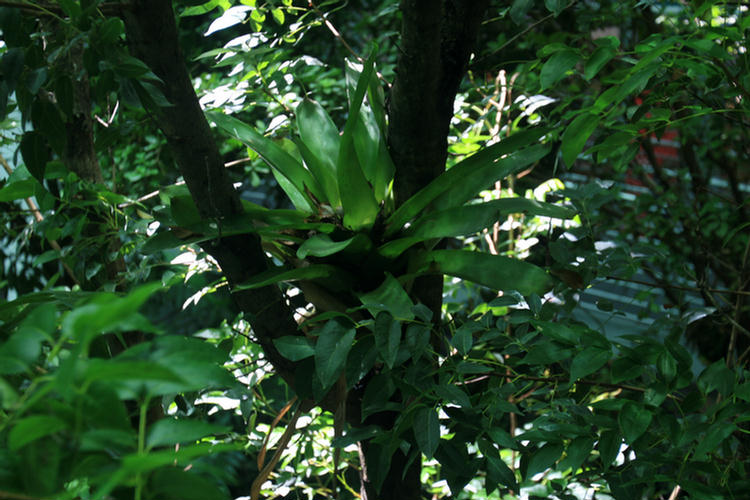
Plants take up growing anywhere they can... Even up in a tree
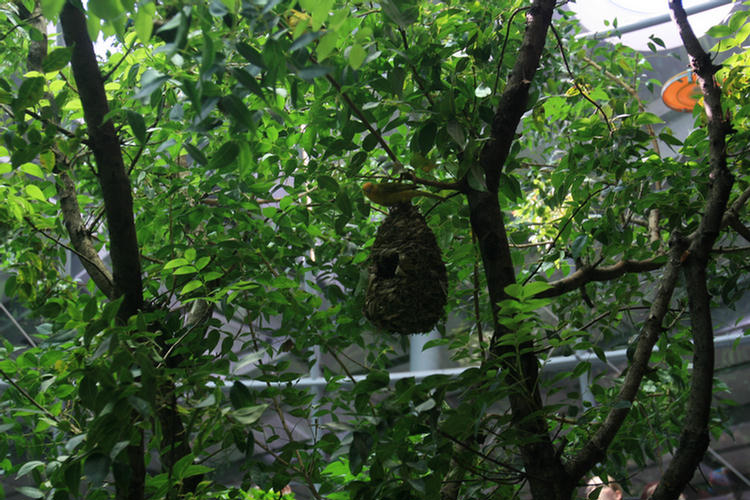
The bird had a smart nest.. away from their natural prey
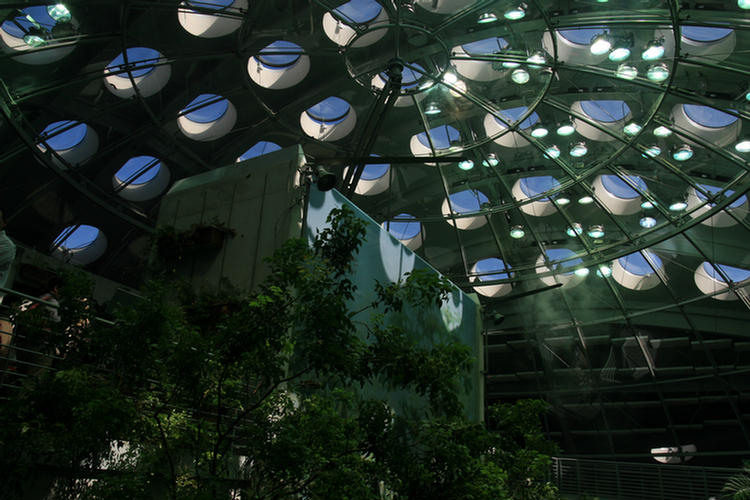
The square at the top was the elevator shaft
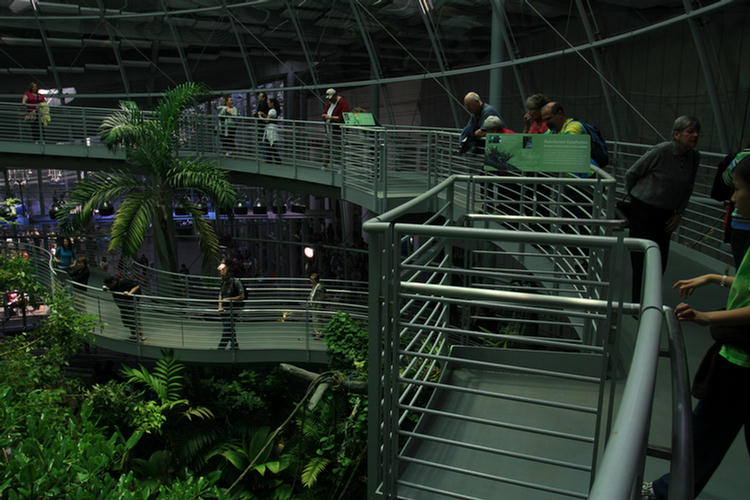
we spent an hour inside the biosphere seeing the sights
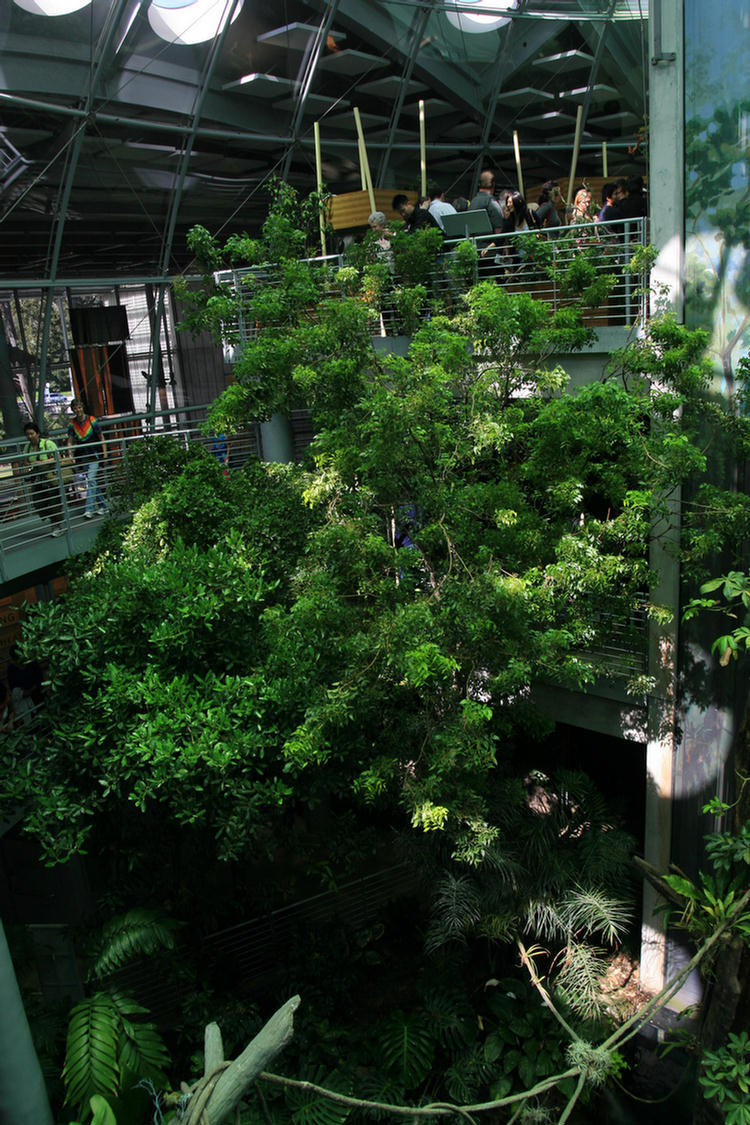
Four stories top to bottom

It was indeed warm and humid

The pool was at the bottom and it was about 30 feet deep

The lighting provided additional heat

Butterflies flitted back and forth around the top of the biosphere
Butterflies occupied the top of the forest along with many birds
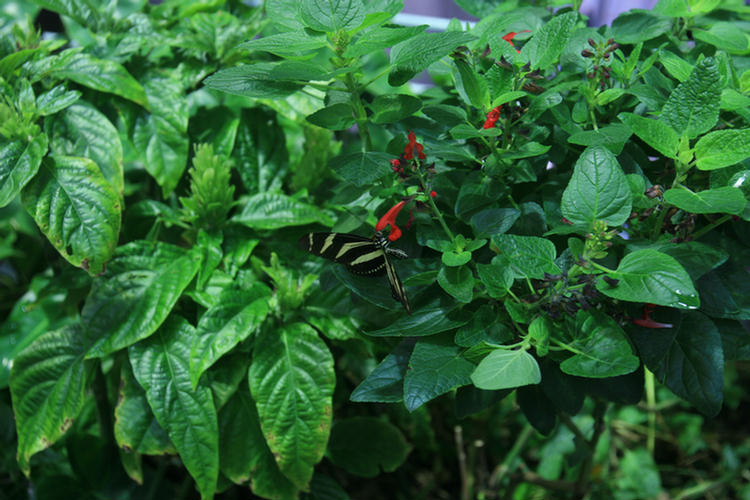
Before getting on the elevator to go down, you had to check for free-loaders!
A Tunnel Provided A Fisheye View Of The Fish