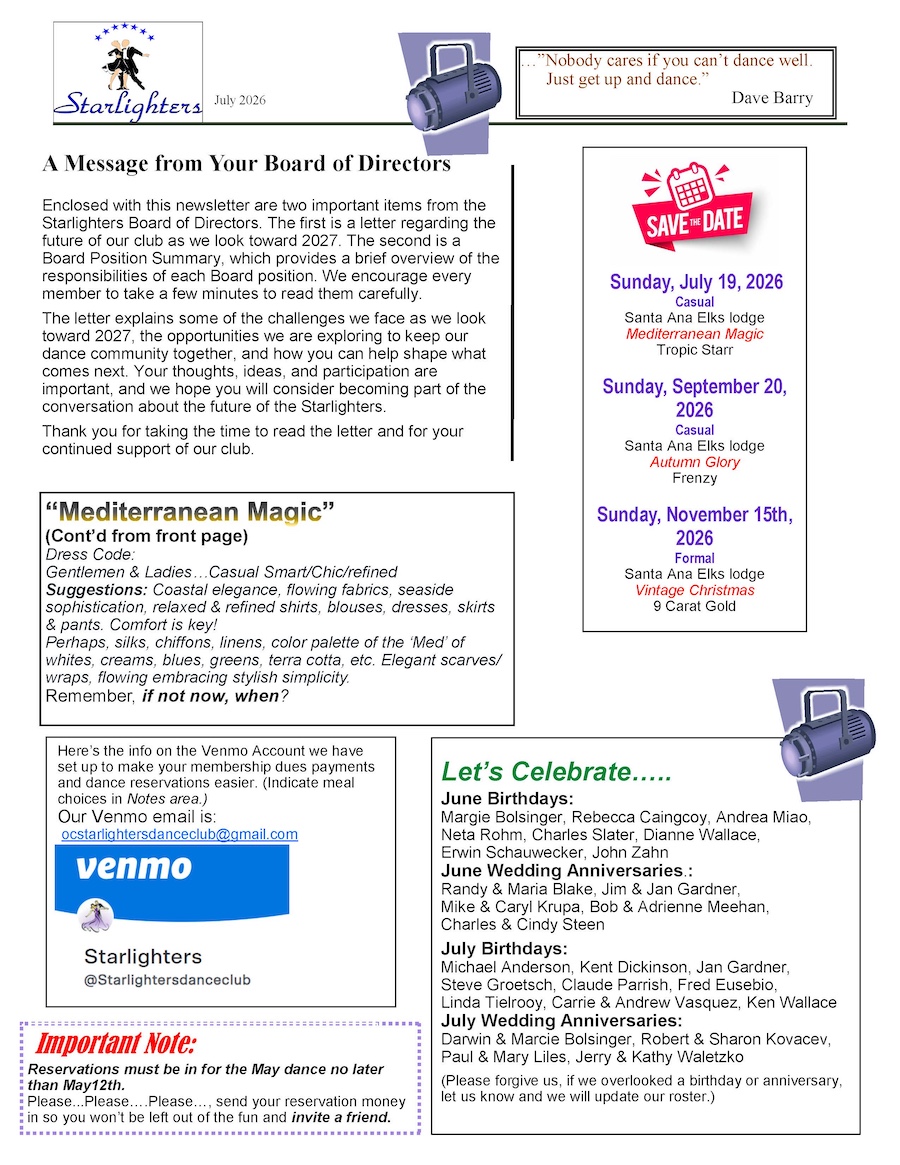
Page One: Welcome To The Mediterranean Magic!
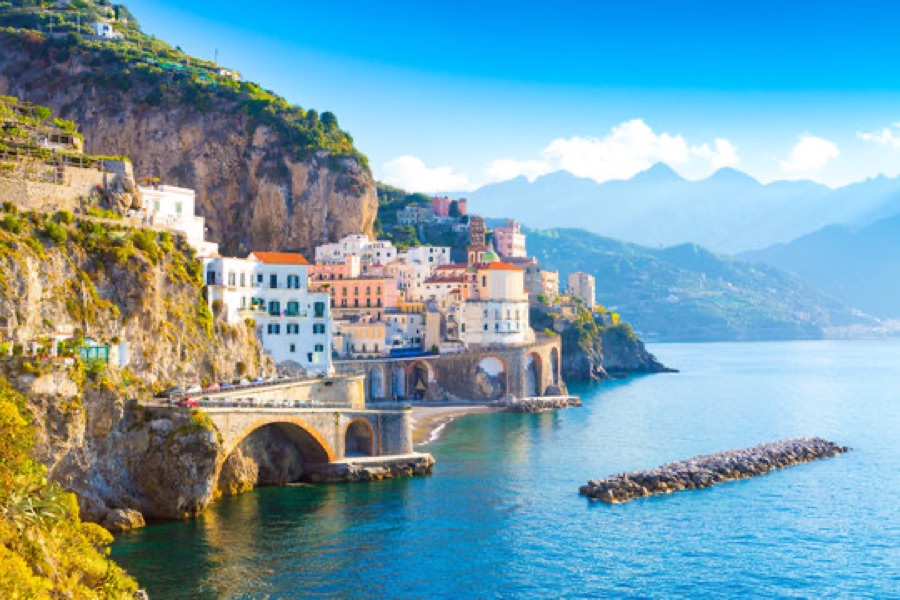
The Starlighters had performed in ballrooms, barns, cruise ships, and one very confusing supermarket opening, but nothing prepared them for dancing in the Mediterranean. It began innocently enough. Their tour guide and current President, Bob Zaitz, pointed to the sparkling blue sea and said, "The water is calm today."
Unfortunately, Donna heard, "The water is calling today," and before anyone could stop her, she had kicked off her sandals and announced, "Places, everyone!"
Within minutes, twelve Starlighters were waist-deep in the Mediterranean, attempting their famous "Moonlight Mambo." The sea, however, had not attended rehearsal.
The Invite
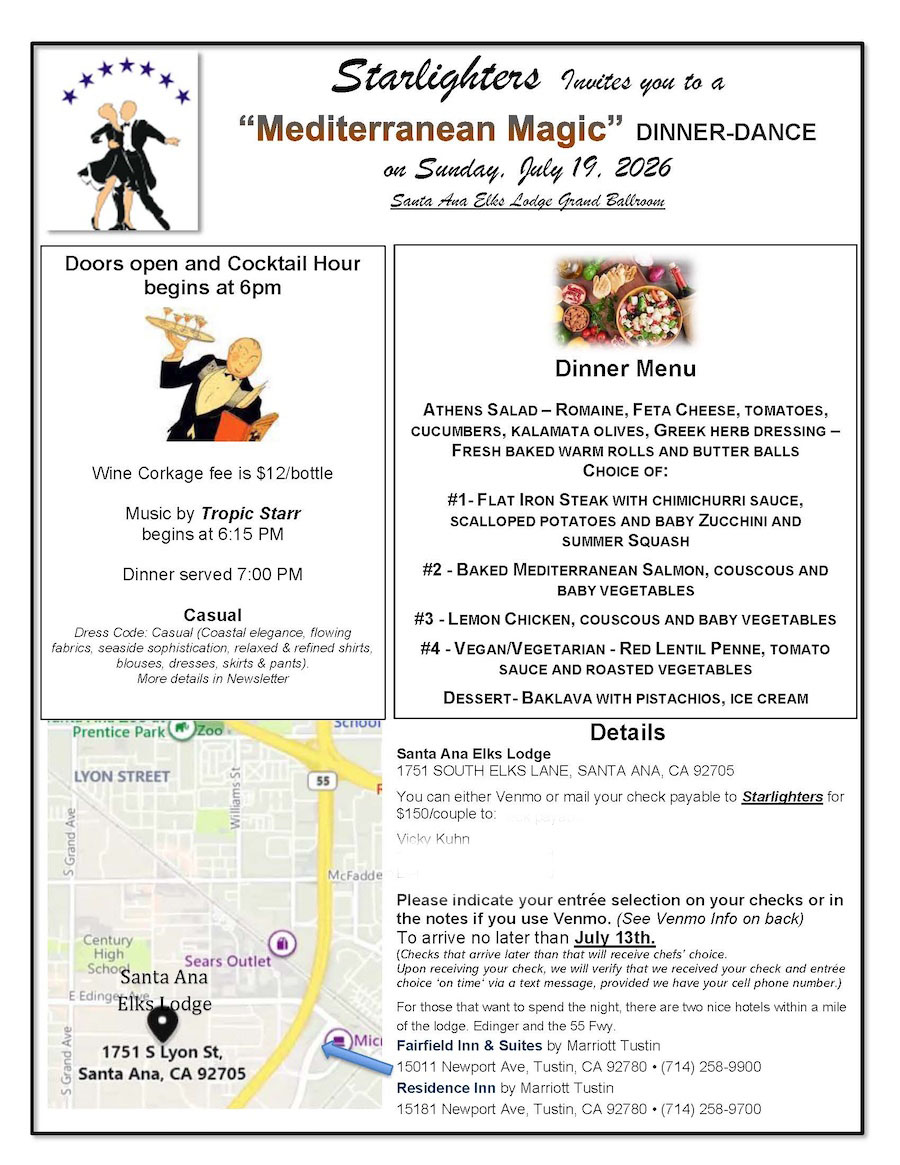
The Time To Re-Read The Latest Newsletter!
Where Shall We Go?
Major cities along or very near the Mediterranean Sea include:
- Barcelona, Spain
- Valencia, Spain
- Marseille, France
- Nice, France
- Monaco, Monaco
- Genoa, Italy
- Naples, Italy
- Palermo, Italy
- Venice, Italy
- Athens / Piraeus, Greece
- Thessaloniki, Greece
- Istanbul, Turkey
- Izmir, Turkey
- Antalya, Turkey
- Beirut, Lebanon
- Tel Aviv, Israel
- Haifa, Israel
- Gaza City, Palestine
- Alexandria, Egypt
- Port Said, Egypt
- Tripoli, Libya
- Tunis, Tunisia
- Algiers, Algeria
- Oran, Algeria
- Tangier, Morocco
Facts
Here are some funny/interesting things about the Mediterranean Sea:
- Its name basically means "middle of the Earth" — from Latin Mediterraneus, because ancient people thought it was at the center of the known world.
- It's almost a giant salty lake — it's connected to the Atlantic Ocean by the very narrow Strait of Gibraltar, so it's kind of like a sea with a tiny doorway.
- It's extra salty — the Mediterranean is saltier than the Atlantic because lots of water evaporates under the hot sun.
•
- It has "mini tides" — compared to oceans, the Mediterranean has very small tides, so beachgoers don't have to chase the sea too much.
- It has been crossed by everyone — Romans, Greeks, Phoenicians, pirates, traders, tourists, and probably someone on an inflatable flamingo.
- There are ancient shipwrecks everywhere — the sea is like an underwater museum full of old boats, amphorae, and lost cargo.
- It once nearly dried up — millions of years ago, during the Messinian salinity crisis, the Mediterranean may have partly dried into giant salt flats. Very dramatic.
- It has a lot of "famous food countries" around it — pizza, pasta, olives, hummus, kebabs, paella, seafood… basically the sea is surrounded by snacks.
- It has dolphins, whales, and monk seals — so it's not just pretty blue water; it has celebrity animals too.
- People call it different names — in history it was called things like "Our Sea" by the Romans, because apparently they were very humble.
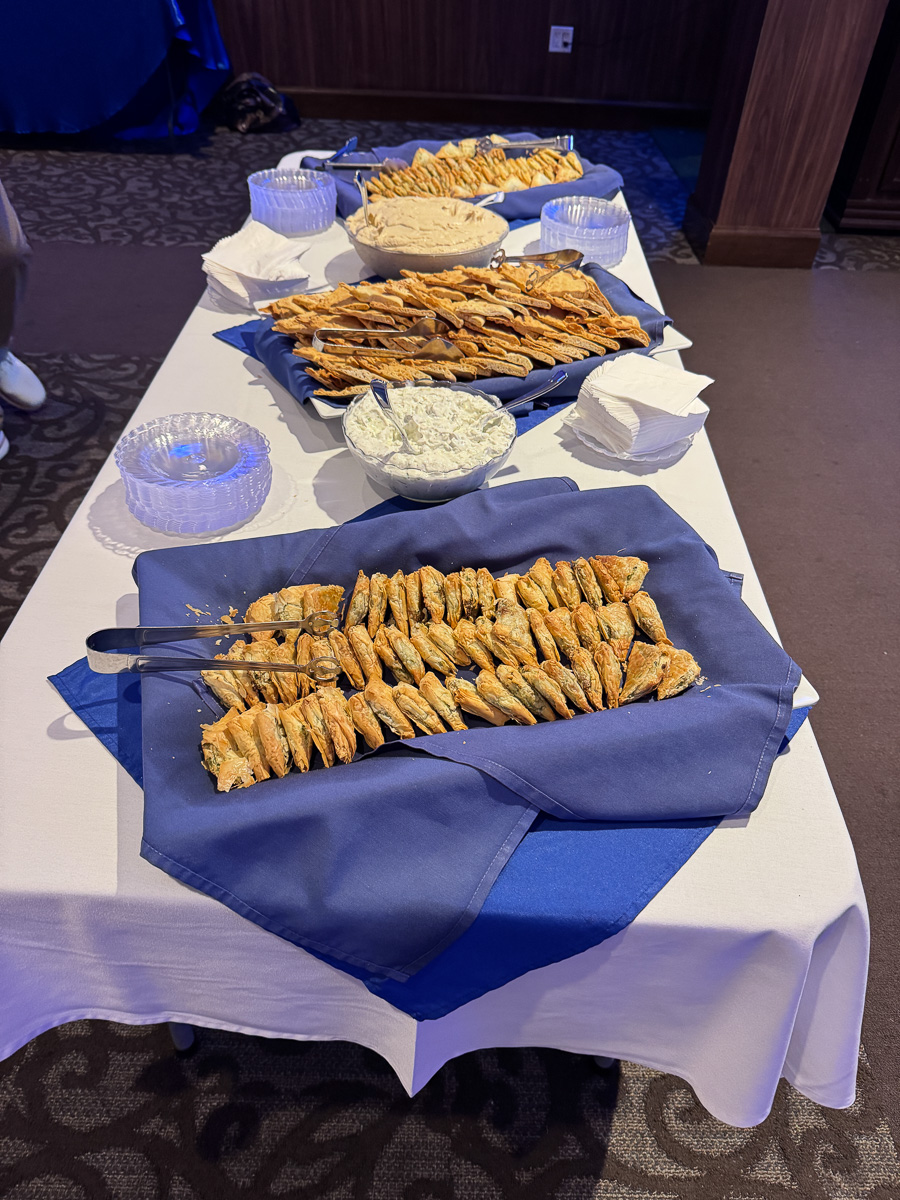
Mediterrenean appetizers of course!
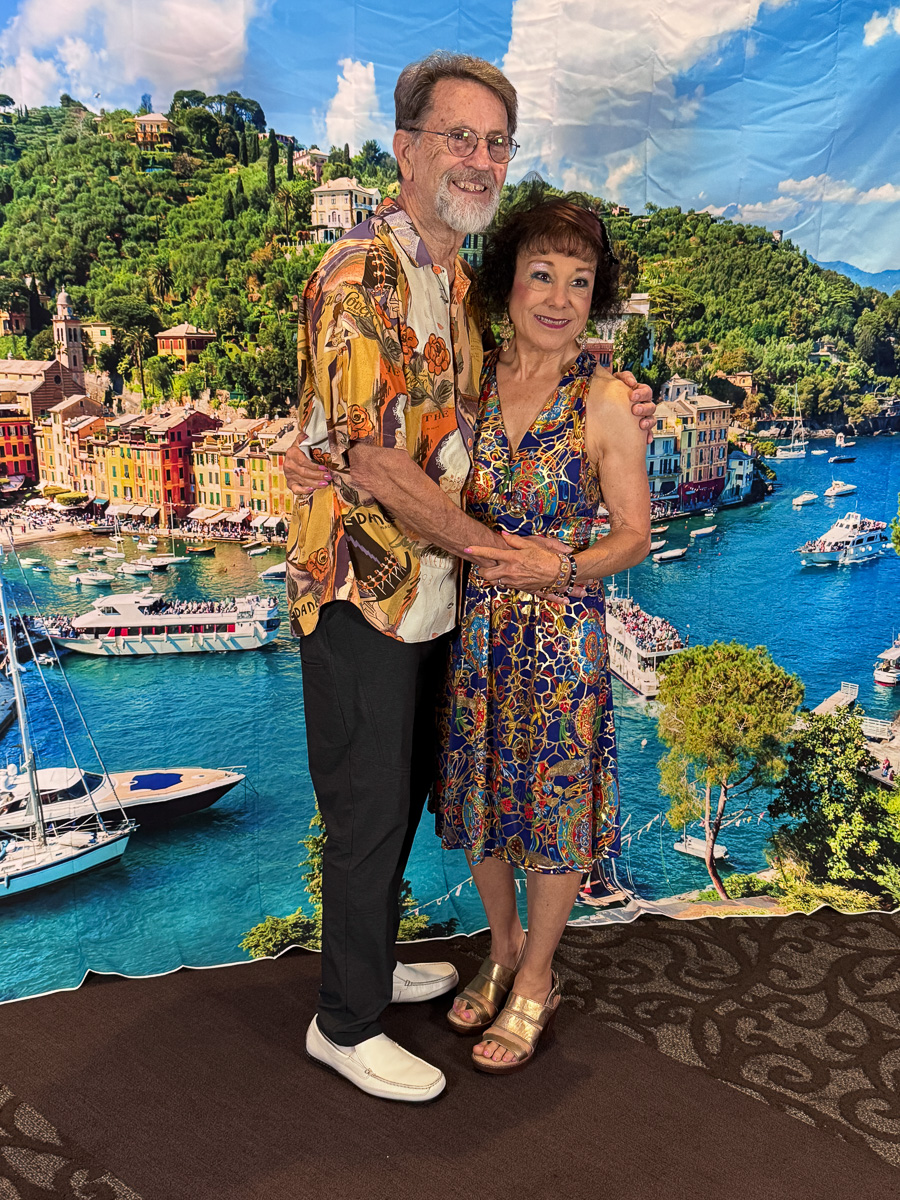
Quick snapshot as they race around the room making everything ready for the arrival of our members.
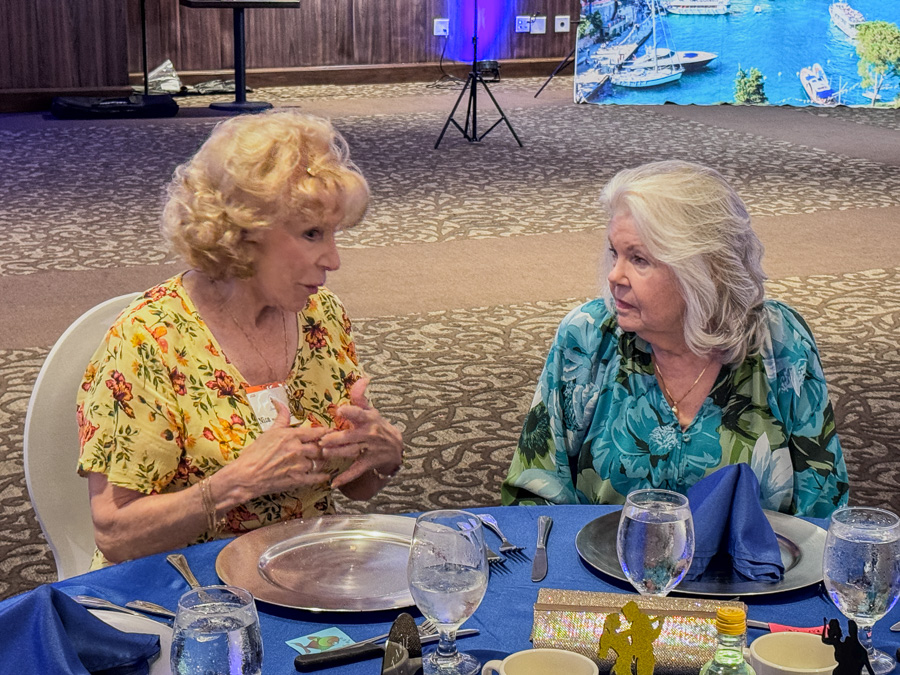
Catching up is essential!
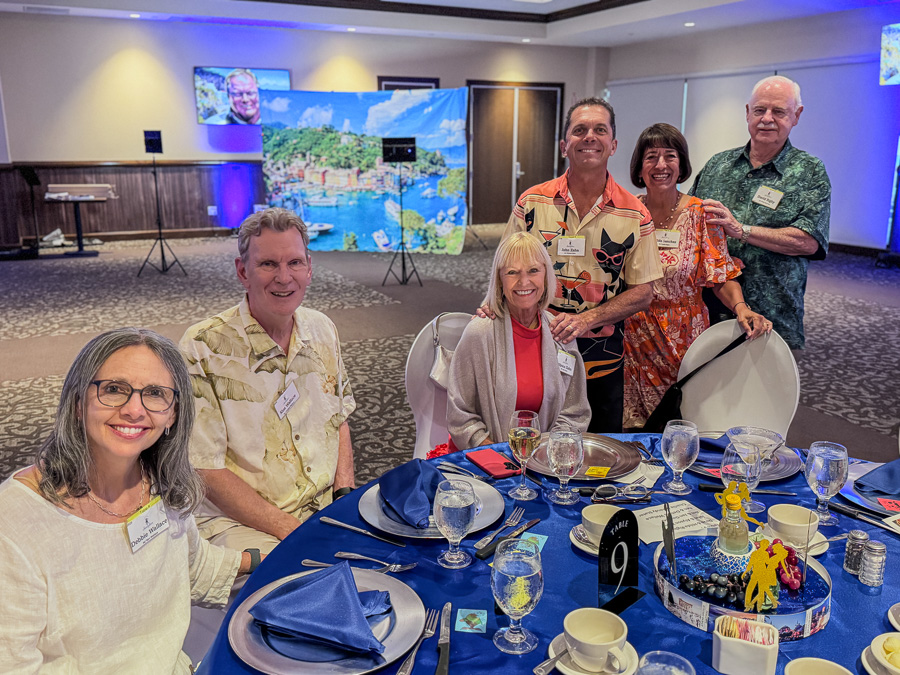
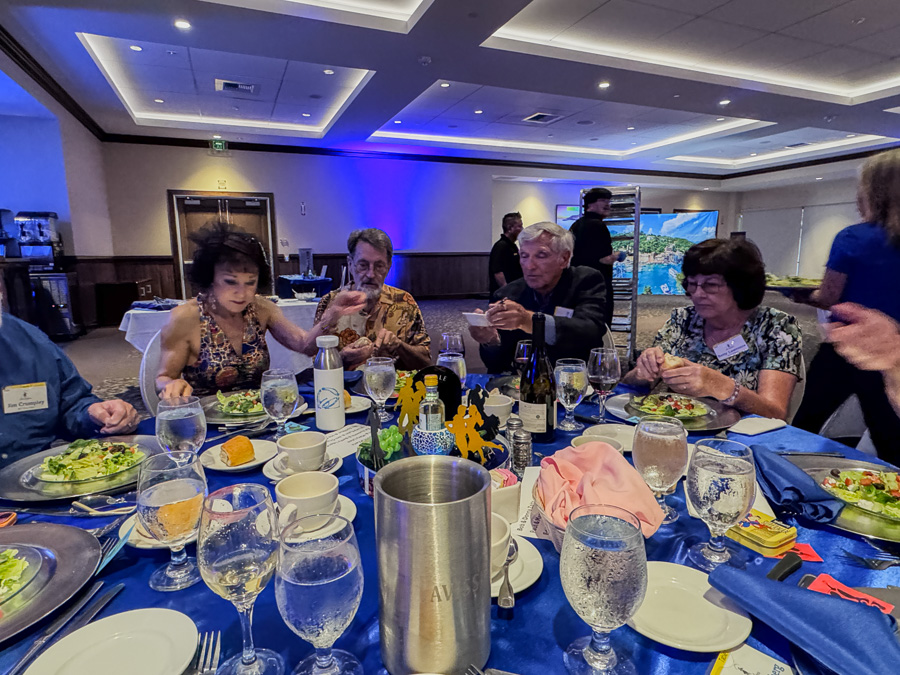
The wine begins to flow!
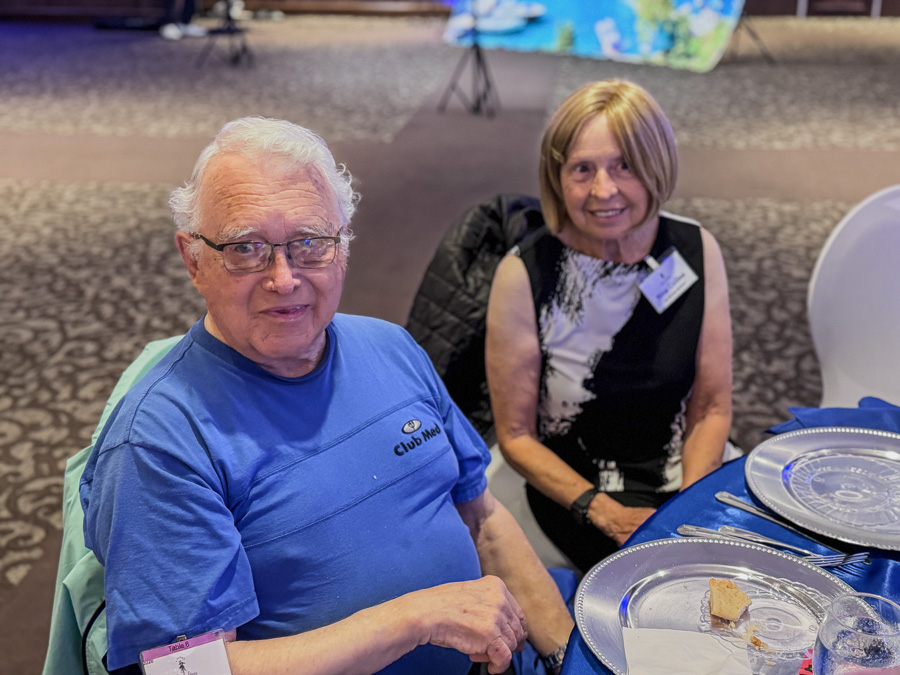
Appetizer approval received!

Sally and Greg are ready for music!
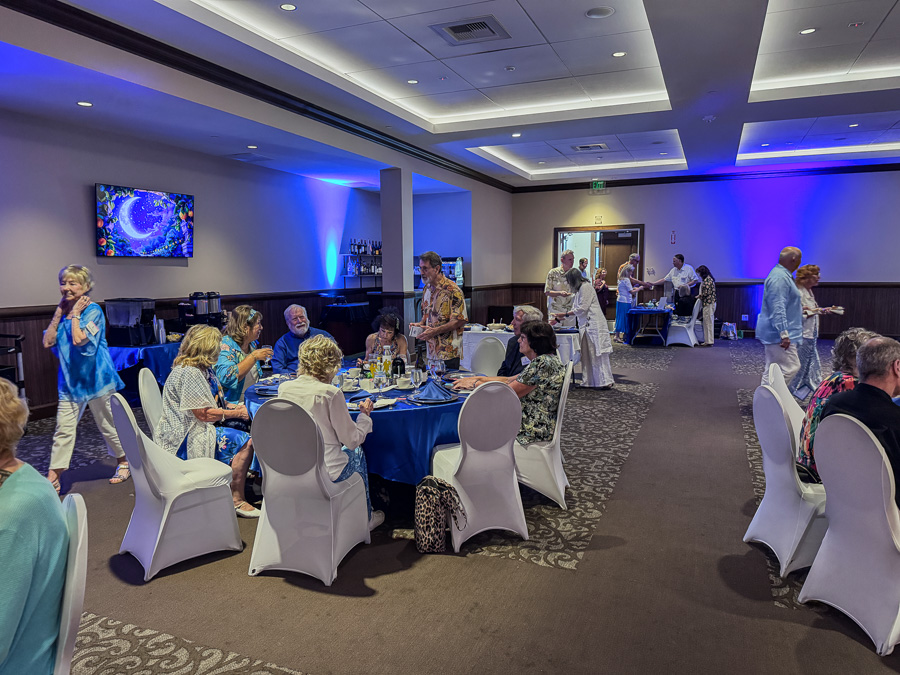
The room gradually fills up!
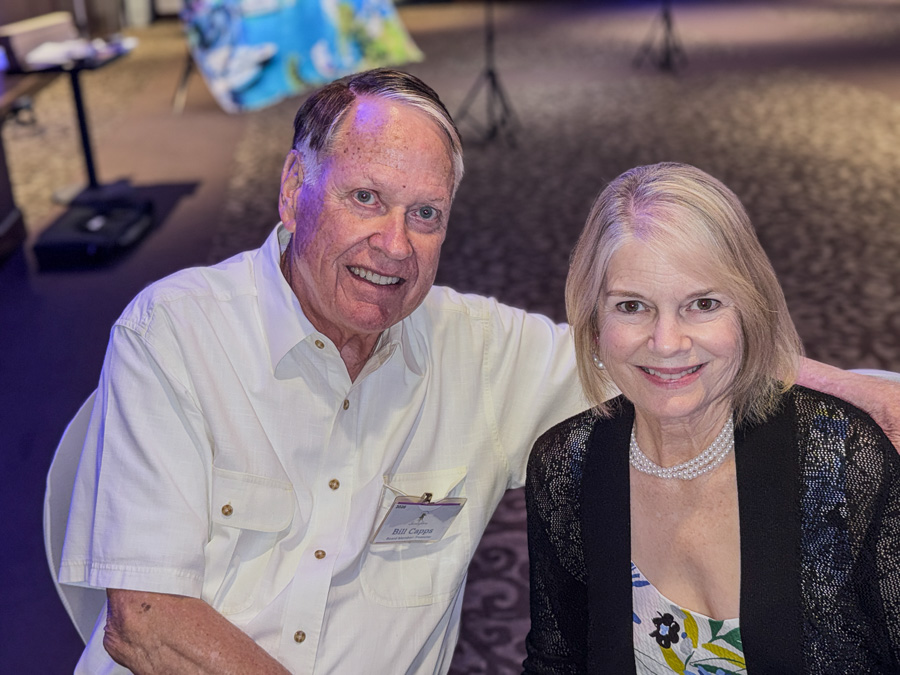
Bill and Sandee and ready to go!
Bill announced that he was going to "tour the Mediterranean" without ever leaving his chair. He spread out a map, played Greek, Italian, and Spanish music, and ordered enough food to feed a small fishing village. Every hour Bill pointed to a new country and changed hats.
A straw hat meant Italy. A sailor's cap meant Greece. A colorful scarf meant Morocco. The other Starlighters wandered over, drawn by the music and irresistible smell of barbecue. "How's the trip?" they asked.
Bill smiled, put on another hat, and replied, "Wonderful! Best of all, I haven't had to unpack a single suitcase!"
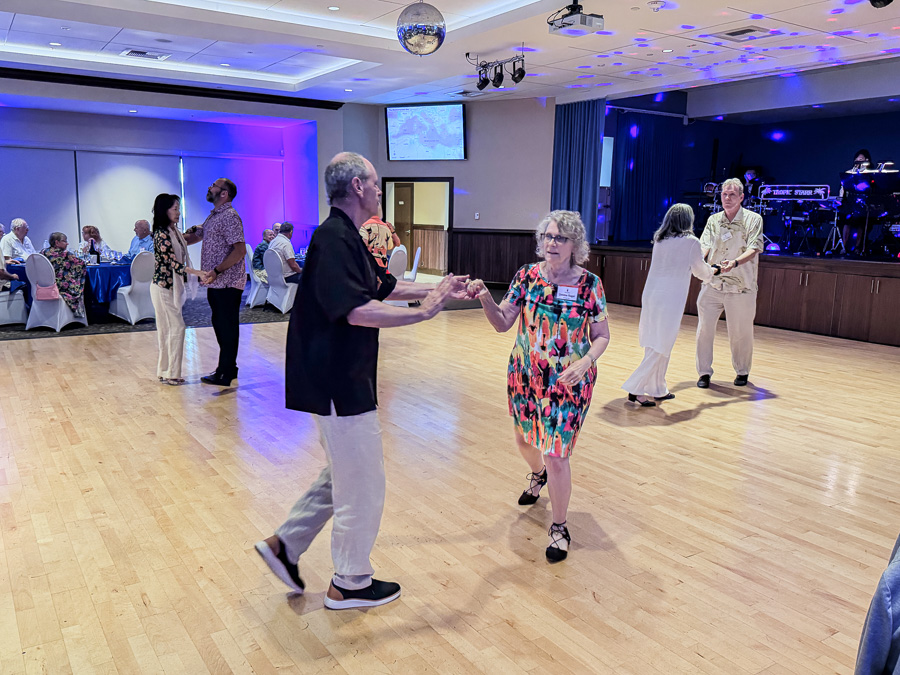
We start slow and build up momentum!
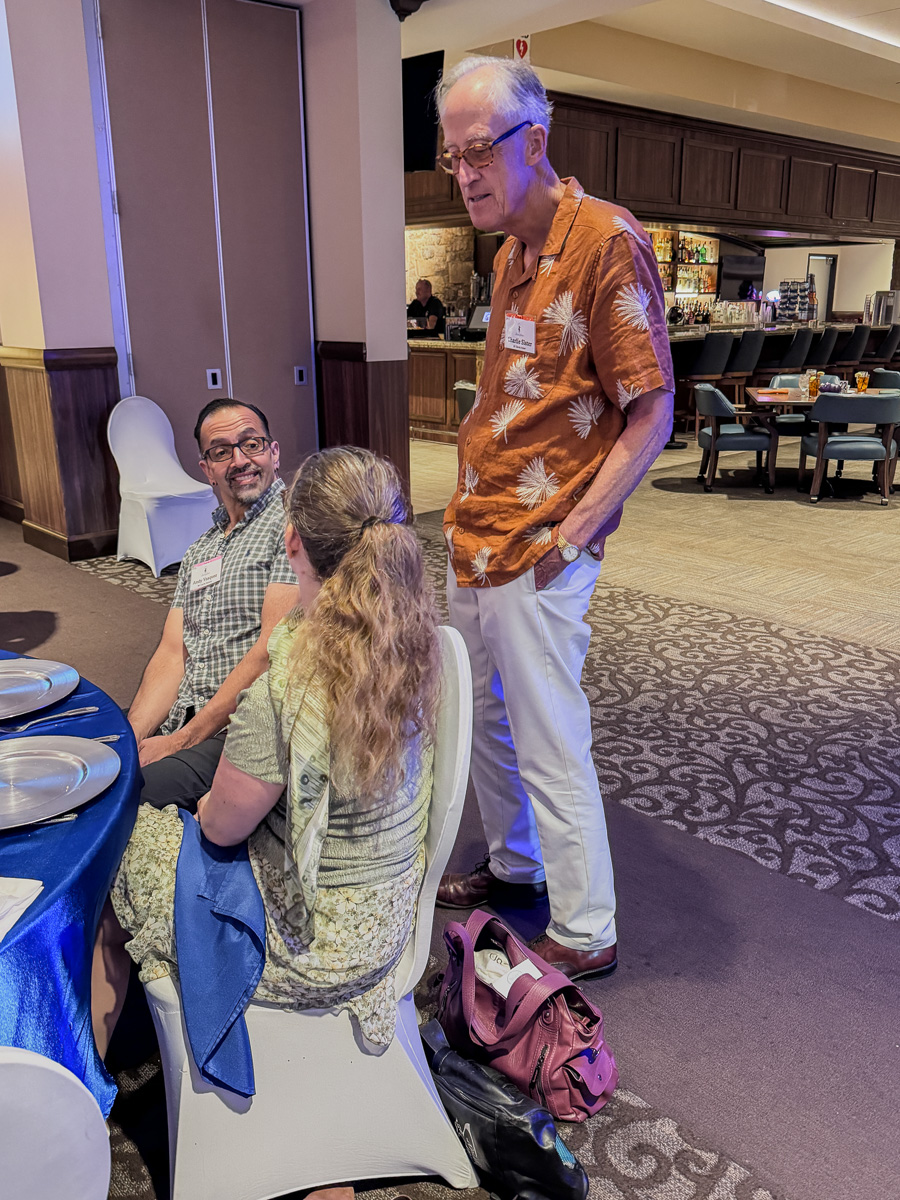
Visiting continues around the floor!
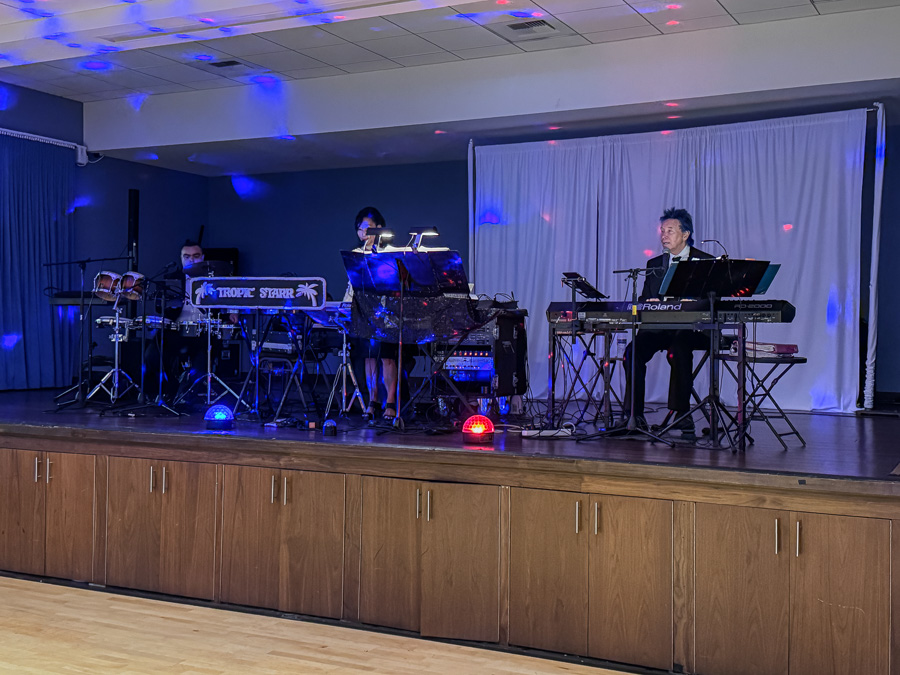
Tropic Starr made their music fit right in!
Here are some fun trivia facts about Mediterranean music:
- Mediterranean music is a crossroads sound — it blends influences from Europe, North Africa, the Middle East, and the Balkans.
- The oud is one of the region's oldest instruments and is often considered an ancestor of the European lute.
- Flamenco has Mediterranean roots, especially from Andalusia in southern Spain, with influences from Arabic, Jewish, Romani, and Spanish traditions.
- Greek rebetiko is sometimes called the "Greek blues" because its songs often deal with hardship, exile, love, and city life.
- The bouzouki, strongly associated with Greek music, became popular in the early 20th century and is now one of Greece's most recognizable instruments.
- Italian tarantella was once believed to cure a spider bite through frantic dancing and music.
- North African raï music, especially from Algeria, mixes traditional Bedouin music with pop, rock, and electronic sounds.
- Many Mediterranean songs use odd rhythms, such as 7/8, 9/8, or 10/8, especially in Balkan and Greek traditions.
- Call-and-response singing is common across the Mediterranean, appearing in folk, religious, and work songs.
- Sephardic Jewish music preserves songs in Ladino, a language descended from medieval Spanish, carried across the Mediterranean after the expulsion of Jews from Spain in 1492.
- The tambourine and frame drum appear in many Mediterranean cultures, from Italy and Greece to Turkey, Morocco, and Egypt.
- Mediterranean music often uses microtones, notes between the pitches used in standard Western music, especially in Arabic, Turkish, and Greek traditions.
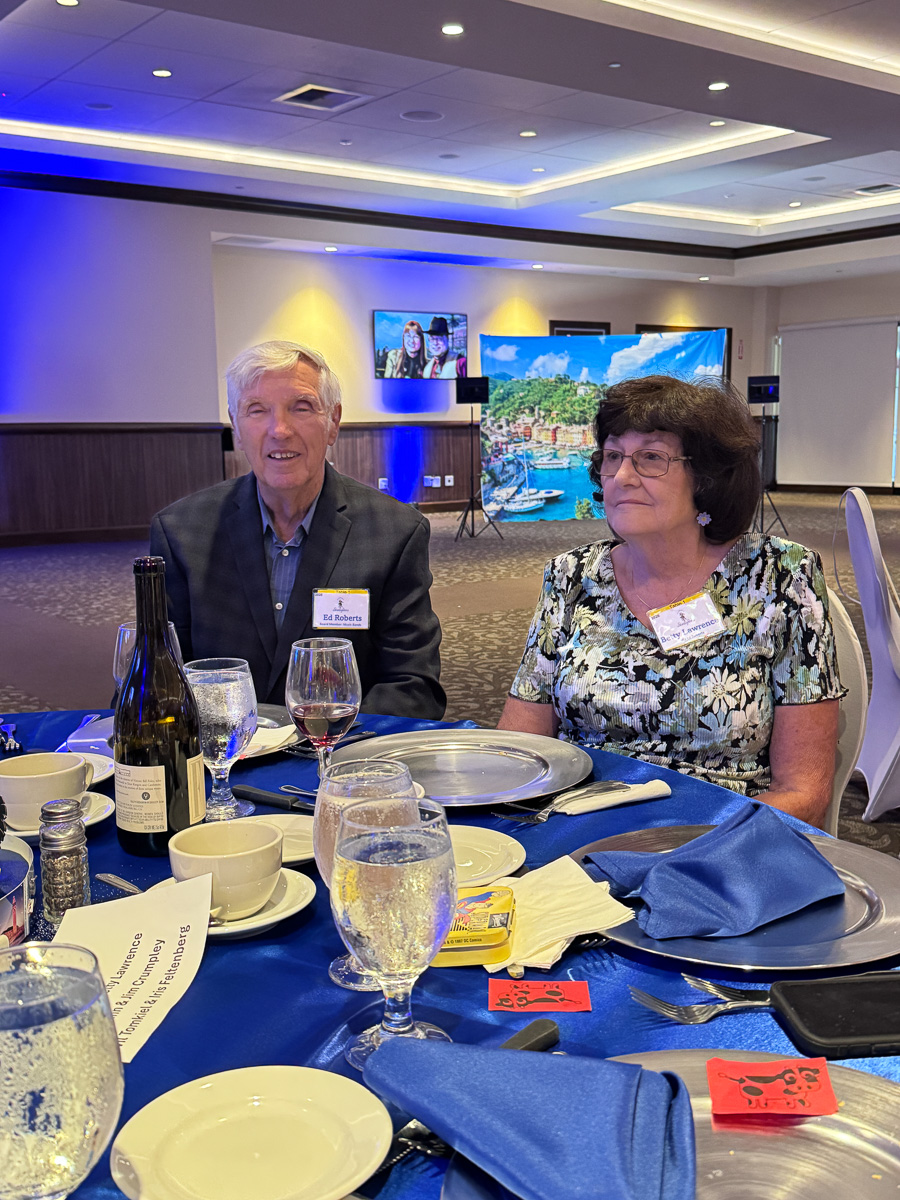
One must have wine before dancing!
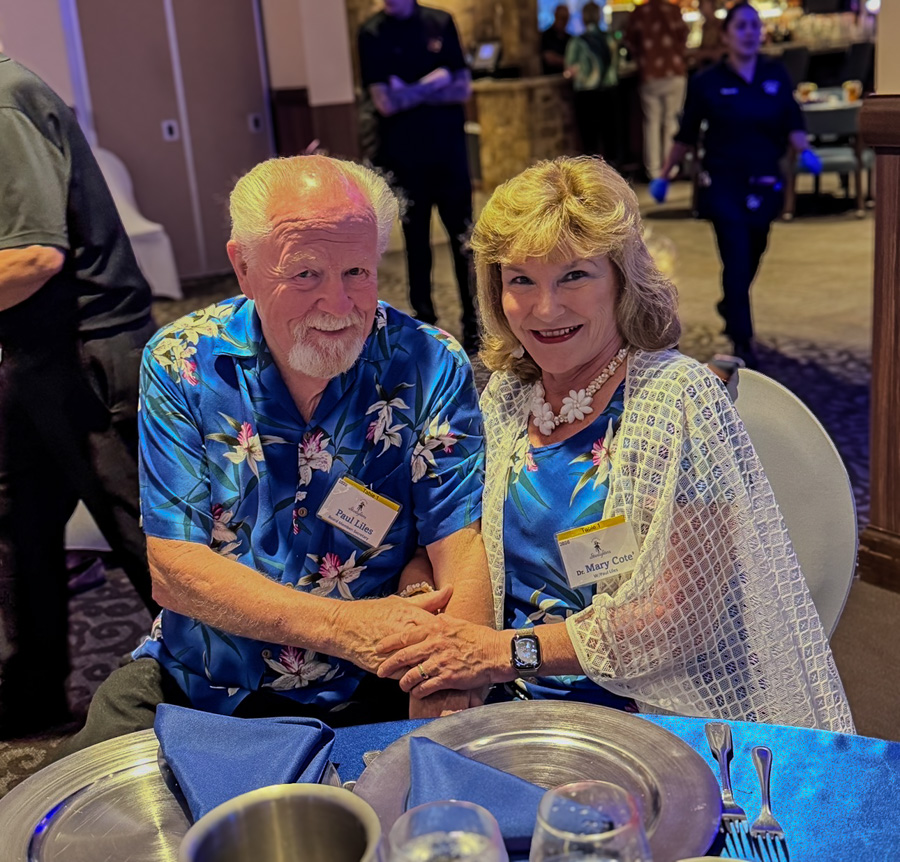
No wine, no dance!!
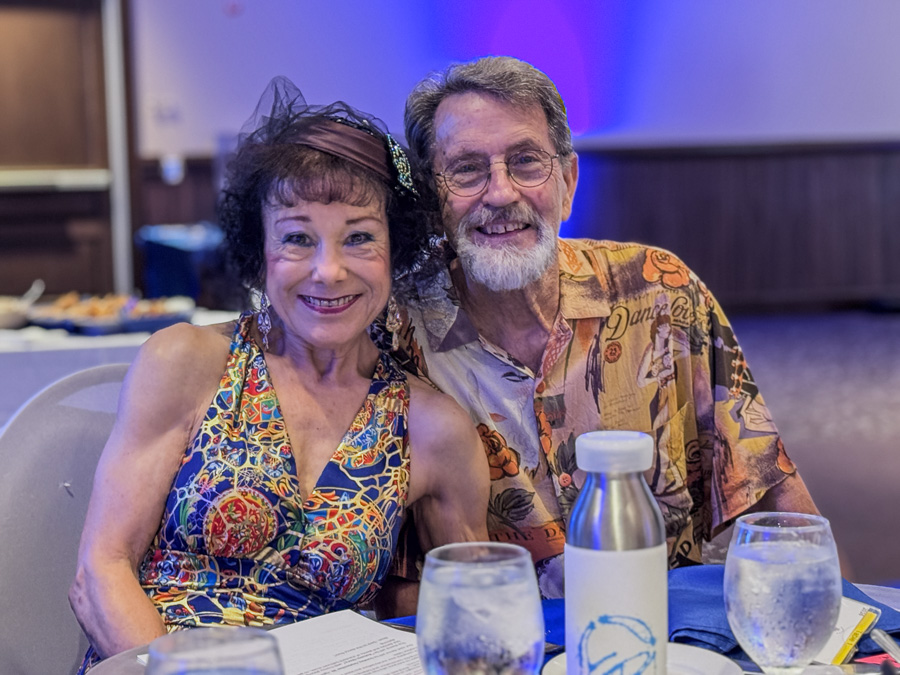
Time to relax as most of our members are here and at their tables!