It Was Years Ago When Dad Was Born
The eleven national censuses conducted between 1900 and 2000 show our nation has undergone a century of tremendous changes in both the makeup of the population and in how Americans live their lives.
Today, most people in the U.S. are female, 35 years old or older and live in metropolitan areas where they own their home. Most people in the U.S. now either live alone or in a households with no more than one or two other people.
100 years ago, most people living in the U.S. were male, under 23 years old, lived in the country and rented their homes. Almost half of all the people in the U.S. lived in households with five or more other people.
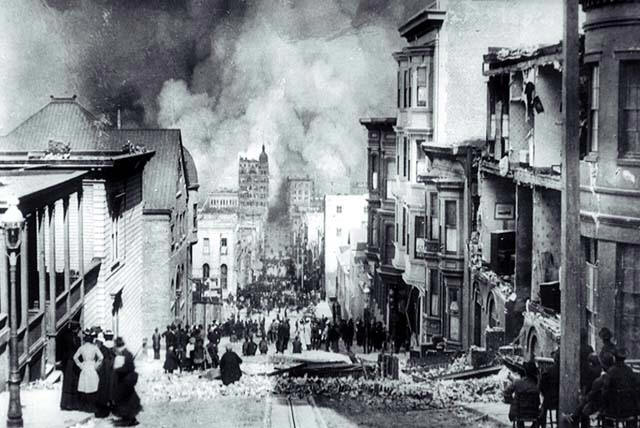
San Francisco Earthquake
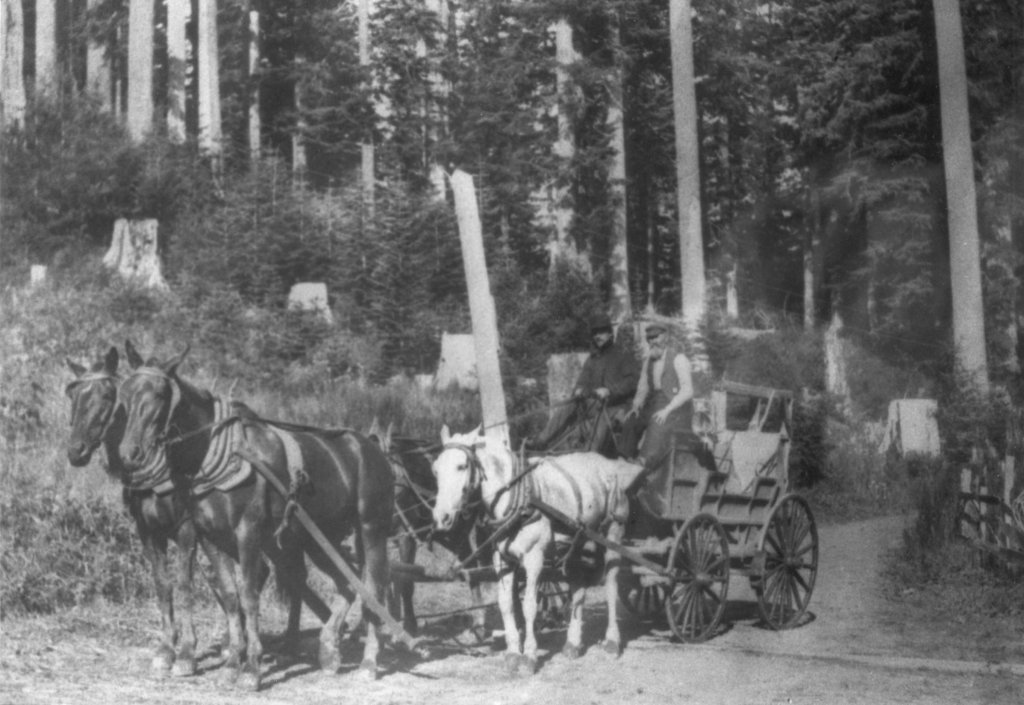
How Most Transportation Occurred In The Small Cities Like McRae
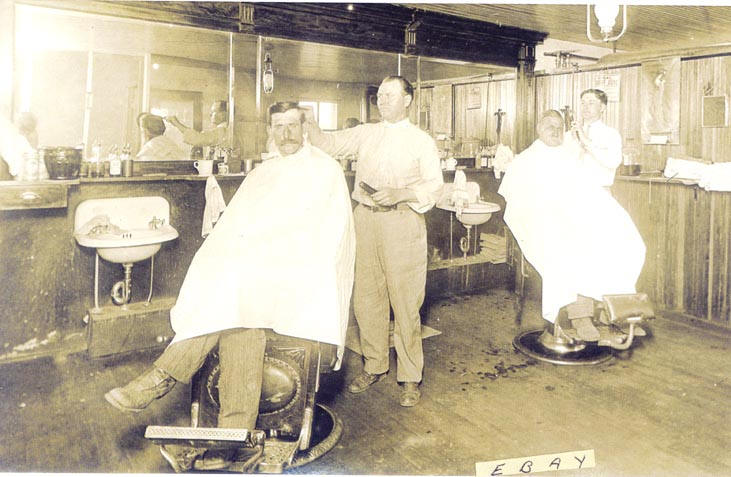
Getting A Haircut
The Year Is 1906.
This will boggle your mind, I know it did mine! Here are some of the U.S. statistics for the Year 1906:
- The average life expectancy in the U.S. was 47 years.
- Only 14 percent of the homes in the U.S. had a bathtub.
- Only 8 percent of the homes had a telephone.
- A three-minute call from Denver to New York City cost eleven dollars.
- There were only 8,000 cars in the U.S., and only 144 miles of paved roads.
- The maximum speed limit in most cities was 10 mph.
- Alabama, Mississippi, Iowa, and Tennessee were each more heavily populated than California.
- With a mere 1.4 million people, California was only the 21st most populous state in the Union.
- The tallest structure in the world was the Eiffel Tower!
- The average wage in the U.S. was 22 cents per hour.
- The average U.S. worker made between $200 and $400 per year .
- A competent accountant could expect to earn $2000 per year, a dentist $2,500 per year, a veterinarian between $1,500 and $4,000 per year, and a mechanical engineer about $5,000 per year.
- More than 95 percent of all births in the U.S. took place at HOME .
- Ninety percent of all U.S. doctors had NO COLLEGE EDUCATION! Instead, they attended so-called medical schools, many of which were condemned in the press AND the government as "substandard."
- Sugar cost four cents a pound.
- Eggs were fourteen cents a dozen.
- Coffee was fifteen cents a pound.
- Most women only washed their hair once a month, and used borax or egg yolks for shampoo.
- Canada passed a law that prohibited poor people from entering into their country for any reason.
-
Five leading causes of death in the U.S. were:
1. Pneumonia and influenza
2. Tuberculosis
3. Diarrhea
4. Heart disease
5. Stroke - The American flag had 45 stars.
- Arizona, Oklahoma, New Mexico, Hawaii, and Alaska hadn't been admitted to the Union yet.
- The population of Las Vegas, Nevada, was only 30!!!!
- Crossword puzzles, canned beer, and ice tea hadn't been invented yet.
- There was no Mother's Day or Father's Day.
- Two out of every 10 U.S. adults couldn't read or write.
- Only 6 percent of all Americans had graduated from high school.
- Eighteen percent of households in the U.S. had at least one full-time servant or domestic help.
- There were about 230 reported murders in the ENTIRE ! U.S.A. !
- Try to imagine what it may be like in another 100 years.
The Written Word
Appleton's Journal (monthly), 1876 - 1881. Appleton's Journal (weekly), 1867 - 1875. Appleton's Magazine, 1905 - 1909.
This was how people communicated. When Dad was born, they published "The Menace of Mechanical Music" by John Philip Sousa, Appleton's Magazine 8 (1906)

1906 Technologies
- Lawrence Hargrave makes the first stable wing design for a heavier-than-air aircraft
- Mass production of the automobile
- Wide popularity of home phonograph
- Panama Canal is built by the United States
- The Photostat machine begins modern era of document imaging
- The Archaeology Guild of Burkina Faso is founded by James Martin.
- Wright Brothers fly at Kitty Hawk, NC.