Ham Radio Was A Great Hobby
Best Hobby A Young Man In The 1950's Could Have!
Enter WA6CJC In Ham Radio
I received my license in Junior High School under the leadership of a teacher, whose name I have forgotten, but was a wild eyes redhead. Our semester project was an intercom made out of an AM radio. He showed us how it worked, how we had to modify the circuits and I was hooked! Until this day, show we some wires and I can figure out how it works....OK, once in a while I have to call my Grandson Zack and say... What do I do now?
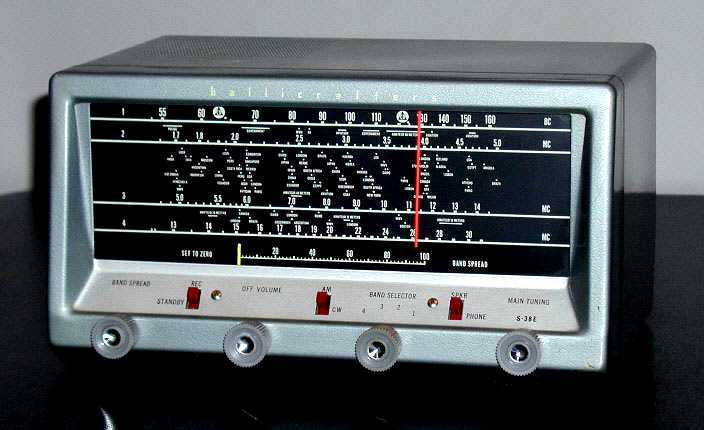
When I got my license I scrambled together some hardware consisting of a Hallicrafters S-38E (it could hear DC to Light at one time) and I decided to get a World Radio Globe Scout 90 Kit!
Great for
Short Wave Listening but useless to
hear Morse code on... It went away fast!
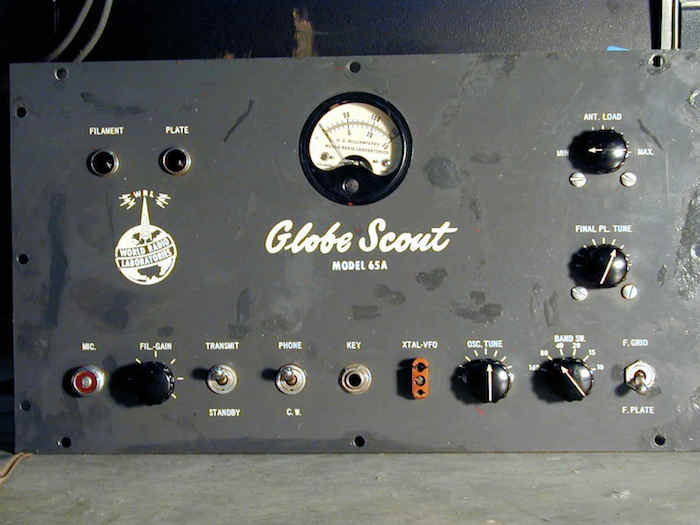
I put it together but it took me several weeks to make it work. I
mis-wired a circuit and nothing came out... Found the problem,
turned it on and away I went!
After getting the transmitter to work, my wonderful parents bought me an NC-303 dream receiver so I could hear and away I went.
With that little transmitter and the boat anchor NC-303 "I worked the world". I get my WAC certificate (Worked All Continents), got 100's of QSL cards from all over the world and then it was time to study hard and leave my Novice License behind and head for the Advanced ticket! When I got it, I got my first real "rig"!
My First Real "Rig"
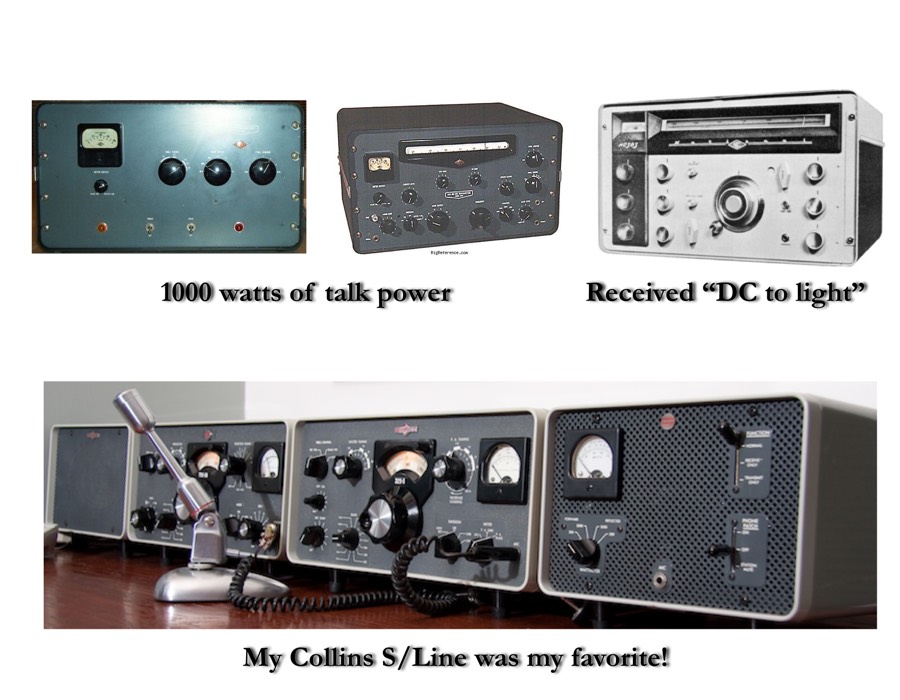
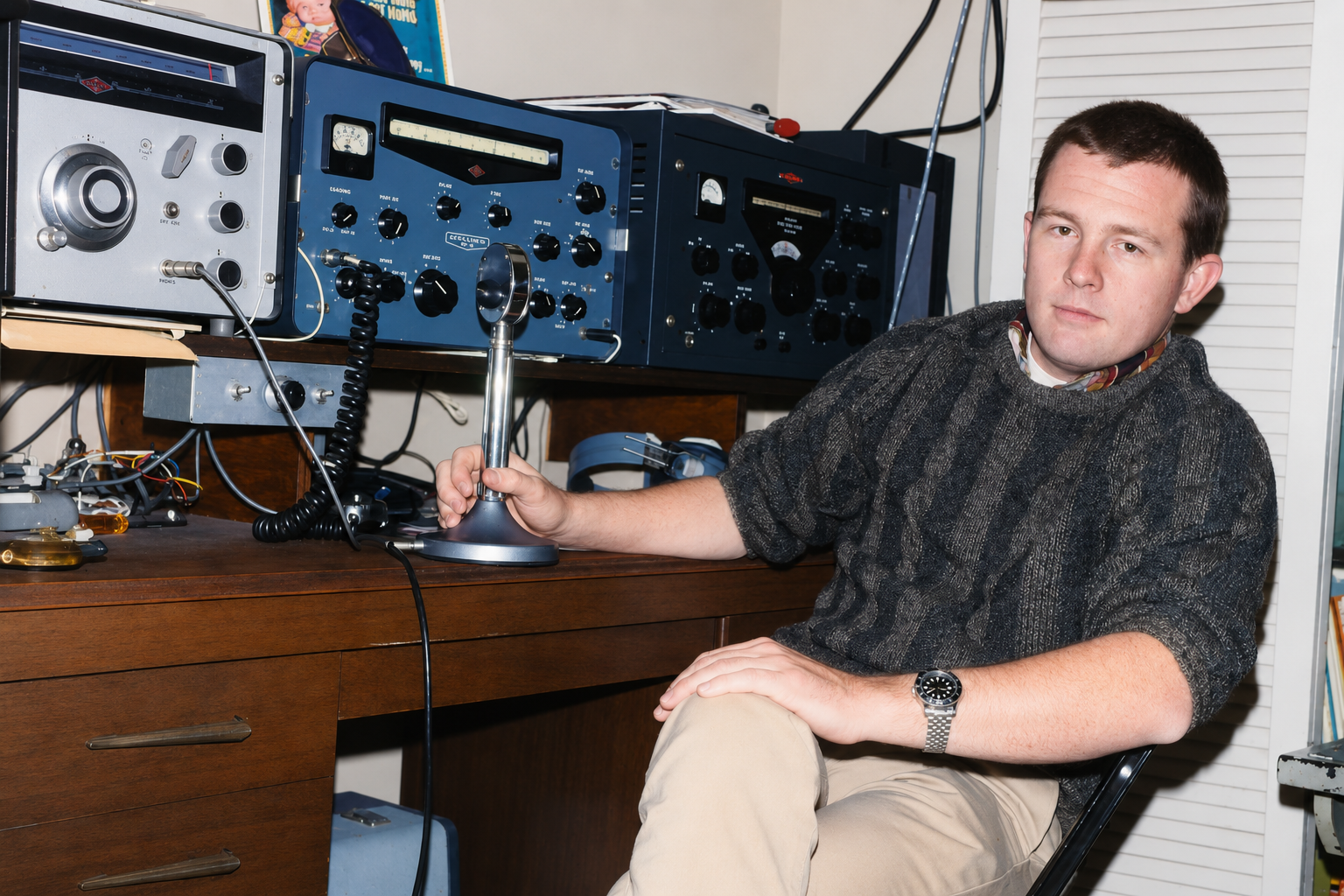
Circa 1975!
I Was First Licensed In 1957
I got my license back in Junior High School and immediately launched what would become a lifelong hobby—also known as "an excellent way to turn allowance money into glowing tubes and mysterious noises."
My first big project was building a transmitter: the trusty Globe Scout 90. To my amazement, it actually worked, and with a brass key and a lot of patience, I managed to contact about 150 countries—possibly because they were impressed, or possibly because they were trying to figure out what that sound was.
I started out using an S38E as my receiver, but after enough drifting, static, and character-building frustration, I finally upgraded to an NC-303—at which point I could hear the stations before they heard me complaining.
My neighbor,
Bob Coomler
and I had a ball. We was licensed as WN6NLP (Nasty Little People).
High School Provided New Friends
In 2000, I visited my high school with Edward Heyman and other friends and got to visit with Mr., Jack Brown my High School Radio Shop Teacher after 40 years!
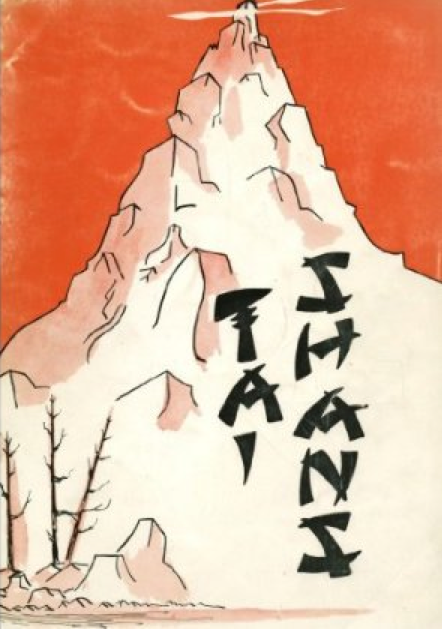
Yes... I was a geek (but we didn't have that term in those days...
It was NERD
Jack Brown Was Our Electronics Shop Instructor
 No nonsense but loads of fun! He was an amazing guy.
Jack passed on a few years later but he was a great teacher, leader, and role model for a lot of us living through the early 1960's.
I will never forget his 1952 Ford with the Elmac transmitter and receiver and long tall whip antenna that always seemed like it was going to hit something.
Morse Code
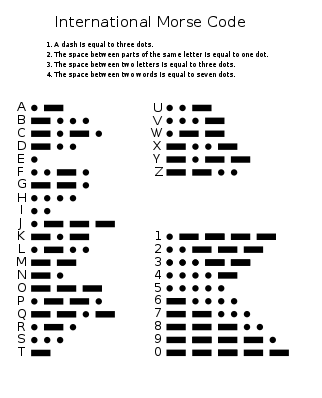
Here's some Morse code trivia:
• Morse code was developed in the 1830s–1840s for use with the electric telegraph.
• It is named after Samuel F. B. Morse, though Alfred Vail played a major role in refining the code.
• The first famous telegraph message sent by Morse in 1844 was: "What hath God wrought". • Morse code uses dots and dashes, also called dits and dahs.
• In proper timing, a dash is three times as long as a dot.
• The most famous Morse code signal is SOS: ... --- ...
• Contrary to popular belief, SOS does not officially stand for "Save Our Ship" or "Save Our Souls". It was chosen because it is simple and unmistakable.
• Morse code was heavily used in railroads, shipping, aviation, military communication, and amateur radio.
• International Morse code is different from the older American Morse code, which was used on landline telegraphs in the United States.
• The letter E is the shortest Morse character: .
• The letter T is also very short: -
• Numbers are longer; for example, 5 is: .....
• Morse code can be sent by sound, light, radio signals, flashing lamps, or even tapping.
• Skilled operators often recognize Morse by rhythm and sound patterns, not by counting dots and dashes.
• In amateur radio, Morse code is often called CW, meaning continuous wave.
• For many years, knowledge of Morse code was required for most ham radio licenses.
• Morse code is still used today by radio amateurs, military operators, survivalists, and aviation/navigation beacons.
• The phrase "73" in Morse/radio tradition means best regards. • The phrase "88" traditionally means love and kisses.
• The classic Morse abbreviation "CQ" means a general call to any station.
Fun example: HELLO in Morse code is: .... . .-.. .-.. ---
Ham's In Los Alamitos
Amazing but we have almost 150!
The Equipment Was Interesting
But remember, the insides were all very accessible and generally had high voltage (300-500 volts) everywhere. The vacuum tubes got red hot so after several hours of having the equipment on, the room was hot as can be. No transistors and no integrated circuits! All the components were attached to a steel or aluminum chassis making the radios weigh in at 50-150 pounds each! Portable means an extension cord!
Globe Scout 90A Transmitter Kit!
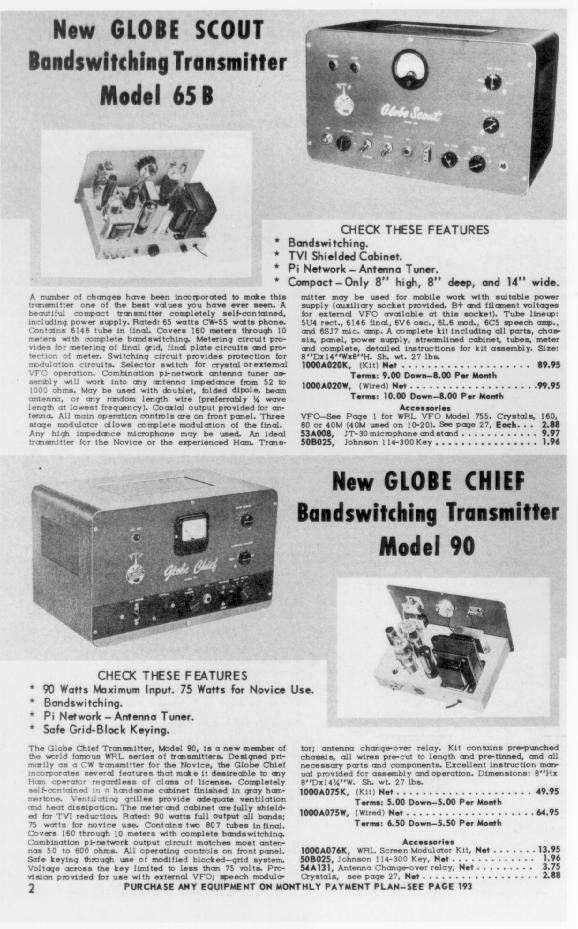
Modes: CW
Bands: 160 - 10 Meters
Input Power: 90W-CW
VFO: No
Power Supply: Internal
Final Tube(s): 2ea. 807
Modulator: Plug-in option
New Price/Year: $59.95 kit, $74.50 wired/1958-1960
Size: 8.0"h x 14.0"w x 9.0"d
Approx. Weight: 27 lbs
Hallicrafters S38E
Here's some Hallicrafters S-38E trivia:
• The S-38E was one of the later versions of Hallicrafters' popular S-38 series of entry-level shortwave receivers.
• It was produced in the 1950s, aimed at beginners, SWLs, and new hams who wanted an affordable general-coverage receiver.
• Coverage was typically from the broadcast band up through shortwave, roughly 540 kHz to 32 MHz in multiple bands.
• It used an AC/DC "transformerless" design, which made it cheaper but also means collectors must be careful: the chassis can present a shock hazard if not properly restored or isolated.
• The S-38E had a built-in speaker, making it a compact all-in-one tabletop receiver.
• It used tubes such as the common "All American Five" style lineup, adapted for shortwave reception.
• The receiver included a BFO, allowing reception of CW and some SSB signals, though tuning SSB on an S-38 takes patience.
• Performance was modest, but many hams remember it fondly as a first receiver.
• The S-38 line is often considered a classic "gateway radio" into amateur radio and shortwave listening.
• Cosmetically, the S-38E had the later, more modern gray metal cabinet and slide-rule dial look compared with earlier S-38 models.
• It was not a communications receiver in the same league as Hallicrafters' higher-end sets like the SX-28, SX-42, or SX-100, but it was much more affordable.
• A restored S-38E can still be enjoyable for AM broadcast, strong shortwave stations, and nostalgic band-cruising.
• Common restoration issues include paper capacitors, electrolytic capacitors, resistors drifting high, and dial-string or alignment problems.
• Because of the hot-chassis design, many restorers add an isolation transformer, polarized cord, fuse, and safety upgrades.
In short: the S-38E wasn't fancy, but it introduced a lot of people to the magic of shortwave radio.
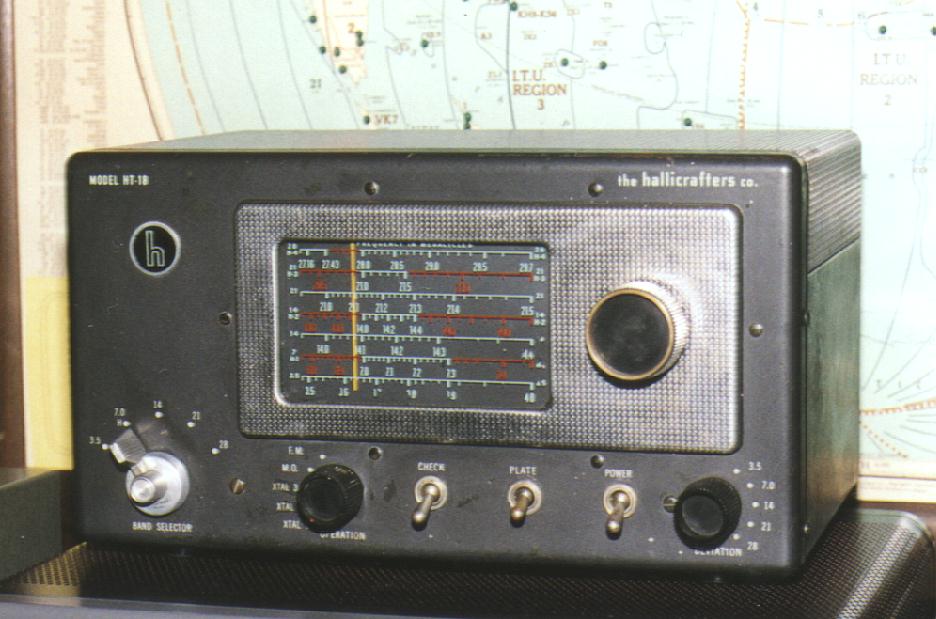
We heard the world from this little box
National NC303 Receiver
Here's some National NC-303 trivia:
• The NC-303 was a high-quality amateur-band communications receiver made by the National Radio Company in the late 1950s/early 1960s.
• It was essentially an improved follow-up to the National NC-300.
• Unlike general-coverage receivers, the NC-303 was aimed mainly at ham radio operators, with bandspread-style coverage of the amateur bands.
• It covered the major HF ham bands of the era, including 160, 80, 40, 20, 15, and 10 meters, with good dial resolution for amateur use.
• The receiver is often remembered for its large, attractive slide-rule dial and "serious ham station" appearance.
• It used a tube design, as expected for its period, and was built during the final golden age of large tabletop tube receivers.
• The NC-303 had good stability for its day, making it useful for CW and SSB, not just AM.
• It included features such as a crystal filter / selectivity controls, useful for reducing adjacent-signal interference.
• National promoted it as a receiver for the operator who wanted better ham-band performance than a casual shortwave set could provide.
• It was often paired with separate transmitters in classic 1950s/60s amateur stations.
• The NC-303 competed with receivers from Hallicrafters, Hammarlund, Collins, and Drake.
• It is not quite as famous as the Collins 75A-series or Drake 2-B/4-line gear, but National fans consider it a very desirable receiver.
• The matching speaker often seen with it is part of the classic station look, though many surviving examples have lost their original accessories.
• Like many vintage receivers, common restoration items include electrolytic capacitors, paper capacitors, drifted resistors, switch contacts, and alignment.
• The NC-303 is appreciated today for its combination of performance, aesthetics, and old-school ham-radio feel. In short: the National NC-303 was a serious ham-band receiver from the tube era—less common than some competitors, but very respected among vintage-radio enthusiasts.
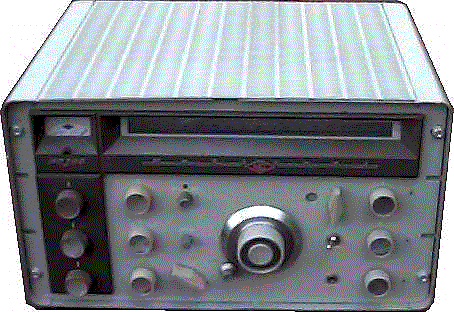
I rebuilt this machine into a non-vacuum-tube system...
pretty hot for its day!!
Collins KWM-2A
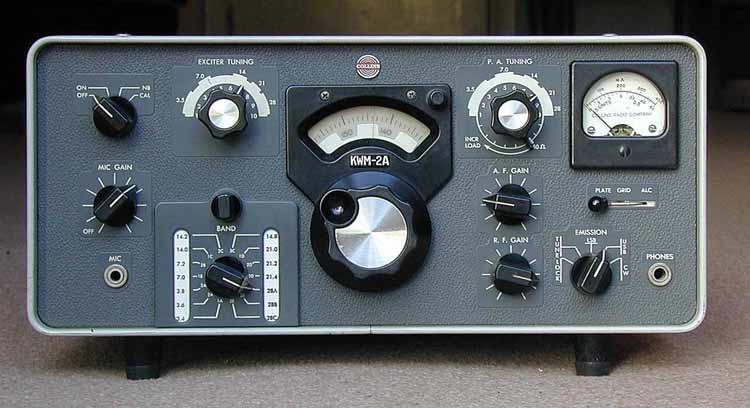
Best radio ever

My Navy Mars AN/SRT-15 which I restored and put on-line for many years